






What's Happening?
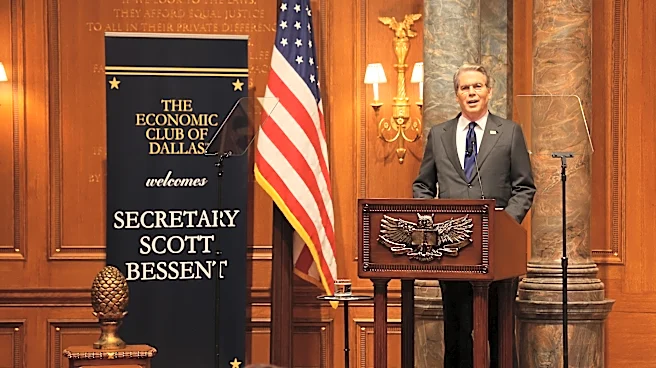
U.S. Treasury Secretary Scott Bessent has publicly called for a significant overhaul at Nvidia, following the resignation of CEO Jensen Huang. Bessent, in an interview on Fox's 'Sunday Morning Futures,' stated that Nvidia's board of directors should prioritize
candidates from 'outside the company' for the new CEO role, emphasizing the need for a 'dramatic shake-up.' Huang's resignation occurred last week after the board initiated an investigation into whether he was the 'target of a foreign intelligence effort.' Concurrently, Huang admitted to an extramarital affair, with reports from The New York Times and Reuters indicating relationships with two Nvidia employees. An October New York Times report also highlighted Huang's 'close relationship' with Alice Huang, a former tech executive suspected by U.S. officials of passing information to China, though China has denied these espionage claims. Bessent also demanded that Nvidia's board address its compliance with U.S. export regulations within the next 10 days, asserting that while Nvidia is a 'wonderful company' and Huang an 'incredible innovator,' these factors do not excuse compliance duties. Nvidia has stated it will consider both internal and external candidates, with CFO Colette Kress serving as interim CEO.
Why It's Important?
Secretary Bessent's strong remarks underscore growing concerns within the U.S. government regarding corporate governance and national security implications within major technology firms. His call for an external CEO at Nvidia signals a desire for a fresh leadership perspective, potentially aimed at restoring confidence in the company's adherence to U.S. regulations, particularly export controls on advanced AI chips. The emphasis on compliance with export restrictions highlights the ongoing geopolitical tensions and the U.S. government's efforts to prevent sensitive technology from reaching adversaries. This situation could set a precedent for increased scrutiny on other U.S. tech companies operating in complex international markets, especially those dealing with dual-use technologies. The controversy surrounding Jensen Huang's resignation, including allegations of foreign intelligence involvement and extramarital affairs, also raises questions about corporate vulnerability to external influence and the personal conduct of top executives in critical industries. The outcome of Nvidia's CEO search and its response to compliance demands will be closely watched by investors, competitors, and government agencies, potentially influencing future corporate governance standards and national security policies in the tech sector.
What's Next?
Nvidia's board of directors is now under pressure to respond to Treasury Secretary Bessent's demands regarding compliance with export regulations within the stipulated 10-day timeframe. This will likely involve a public statement or internal review detailing their adherence to U.S. trade policies. Concurrently, the search for a new CEO will intensify, with Bessent's comments pushing the board towards external candidates. While Nvidia has stated it will consider both internal and external options, the public pressure from a high-ranking government official may sway their decision-making process. The ongoing internal investigation into Jensen Huang's conduct and potential foreign intelligence involvement will also continue, with its findings potentially influencing the company's future strategic direction and public perception. The U.S. Justice Department's conclusion on the espionage claims involving Alice Huang remains pending, and any developments there could further impact Nvidia. Stakeholders, including investors and government officials, will be closely monitoring Nvidia's actions to ensure robust governance and compliance, especially concerning the sensitive nature of AI chip technology and its global distribution.
Beyond the Headlines
The situation at Nvidia extends beyond immediate leadership changes, touching upon deeper issues of corporate espionage, national security, and the ethical responsibilities of technology leaders. The allegations of foreign intelligence efforts targeting a CEO of a critical technology company highlight the evolving landscape of geopolitical competition, where economic and technological dominance are intertwined with national security. This incident could prompt a broader re-evaluation of security protocols and vetting processes for executives in sensitive industries, particularly those with significant international operations. Furthermore, the intersection of personal conduct, such as extramarital affairs, with national security concerns raises complex ethical dilemmas for corporate boards and government oversight bodies. It underscores the vulnerability of individuals in positions of power to various forms of influence. The ongoing feud between Treasury Secretary Bessent and Commerce Secretary Howard Lutnick over AI chip diversion to China, mentioned in the broader context, suggests internal government disagreements on how best to manage technological competition and enforce export controls. This internal dynamic could lead to shifts in inter-agency cooperation and policy enforcement regarding critical technologies.