



What's Happening?
Amazon has resumed the expansion of its brick-and-mortar Amazon Fresh grocery stores in the U.S., marked by the recent opening of a new location in Eatontown, N.J. This development signals a renewed focus on physical retail for the online giant, following
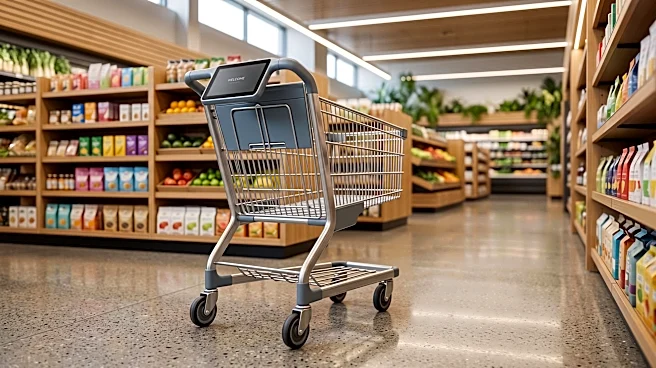
a period where many announced stores faced delays or were never opened. Reports from local news organizations indicate that previously stalled Amazon Fresh projects in Gaithersburg, Md., and Alexandria, Va., are now back in progress, with 'Delicious Groceries Coming Soon' signs appearing at these sites. The Gaithersburg location, which had its Amazon Fresh signs removed last year despite being built out, is now actively hiring. Similarly, the Alexandria store, initially announced in May 2021 as a 50,000-square-foot facility, is also showing signs of renewed activity. This move comes after Amazon announced in April its decision to discontinue the use of cashierless 'Just Walk Out' technology in its U.S. Amazon Fresh stores, instead focusing on AI-powered 'Dash Carts'.
Why It's Important?
The re-energized expansion of Amazon Fresh's physical stores is a significant indicator of Amazon's long-term strategy in the competitive U.S. grocery market. By investing in brick-and-mortar locations, Amazon aims to capture a larger share of the grocery sector, which traditionally relies heavily on in-person shopping experiences. This move could intensify competition for established grocery chains, potentially leading to price wars, enhanced customer services, and technological innovations across the industry. The shift away from 'Just Walk Out' technology towards 'Dash Carts' suggests Amazon is refining its in-store experience, prioritizing customer convenience and potentially addressing previous operational challenges. For consumers, this expansion means more options for grocery shopping, potentially including faster access to fresh produce and household staples, and a blend of online and in-store purchasing flexibility. The creation of new jobs for these stores also provides economic benefits to the local communities where they are established.
What's Next?
The immediate next steps for Amazon Fresh involve the opening of the re-activated stores in Gaithersburg, Md., and Alexandria, Va., with hiring already underway for the Maryland location. While specific opening dates have not been announced, the visible progress suggests these stores could become operational in the near future. It is anticipated that Amazon will continue to evaluate and potentially expand its physical footprint in other U.S. markets, adapting its strategy based on the performance of these new and re-activated locations. The company's focus on 'Dash Carts' indicates a continued commitment to integrating technology into the in-store shopping experience, and further developments in this area can be expected. Competitors in the grocery sector will likely monitor Amazon's progress closely, potentially adjusting their own strategies to counter Amazon's growing presence in the physical retail space.
Beyond the Headlines
This renewed push into brick-and-mortar grocery stores by Amazon Fresh highlights a broader trend in retail where online and offline channels are increasingly converging. While Amazon initially disrupted traditional retail with its e-commerce model, its sustained investment in physical stores, including the acquisition of Whole Foods, demonstrates the enduring value of a tangible presence for certain product categories, particularly groceries. The decision to pivot from 'Just Walk Out' to 'Dash Carts' also reflects the ongoing experimentation and evolution in retail technology, as companies seek the optimal balance between innovation, customer experience, and operational efficiency. This strategic adjustment could influence how other retailers approach cashierless or automated checkout systems, emphasizing solutions that are both technologically advanced and widely accepted by consumers. Ultimately, Amazon's continued foray into physical grocery retail underscores the complexity of the modern consumer market and the necessity for a multi-faceted approach to meet diverse shopping preferences.