





What's Happening?
The documentary 'You Can See Everything,' directed by Nathan Fielder and Lance Oppenheim, has become a major box office hit, grossing over $50 million domestically within approximately two weeks of its release. This achievement is notable for a documentary,
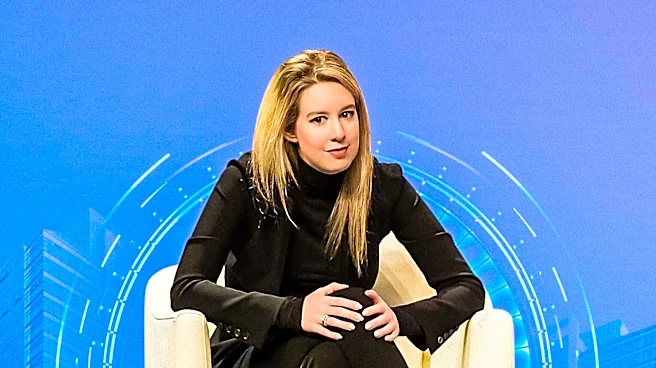
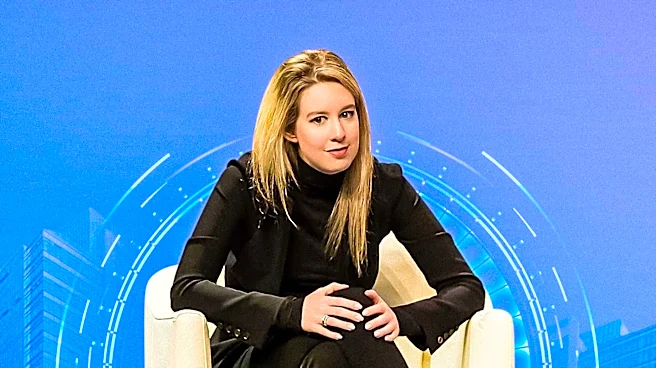
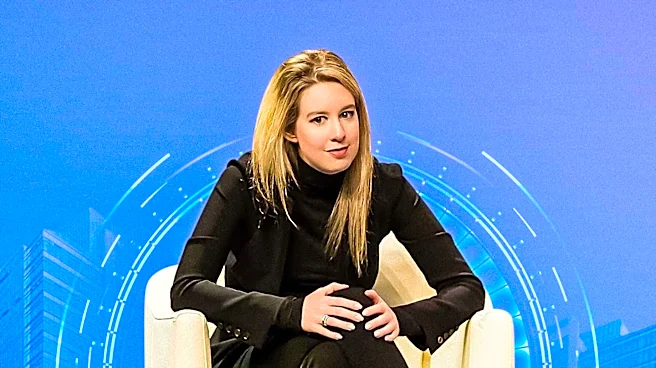
placing it among a select few non-music documentaries to reach this milestone, alongside 'March of the Penguins' (2005) and 'Fahrenheit 9/11' (2004). The film, which premiered unexpectedly at the 53rd Telluride Film Festival, has garnered widespread critical acclaim, boasting a Metacritic score of 97 out of 100 from 41 reviews. The documentary centers on Elizabeth Holmes, founder of the blood-testing startup Theranos, chronicling her journey from a self-made billionaire to her conviction for fraud and the start of her prison sentence in 2023. The film uniquely features Holmes inviting a film crew to document her actions 34 days before her incarceration, and incorporates meta-layers, including actress Amanda Seyfried watching footage of Holmes watching Seyfried playing Holmes in the miniseries 'The Dropout.'
Why It's Important?
The commercial and critical success of 'You Can See Everything' signifies a potential shift in the documentary landscape, demonstrating that non-fiction films can achieve mainstream box office appeal typically reserved for narrative features. Its strong performance challenges the traditional perception within the Academy of Motion Picture Arts and Sciences' documentary branch, which has historically overlooked popular or celebrity-focused documentaries. This film's success could encourage a broader acceptance of diverse filmmaking techniques and subject matter within the documentary category, potentially influencing future Oscar nominations. The film's innovative use of meta-narrative and its exploration of a high-profile U.S. legal and business scandal resonate with contemporary audiences, highlighting the public's interest in complex real-world stories and unconventional storytelling. The discussion around Amanda Seyfried's potential Oscar nomination for her role in the documentary further blurs the lines between documentary and narrative performance, indicating a evolving appreciation for acting within non-fiction contexts.
What's Next?
The film is currently considered a contender for an Oscar nomination in the Best Picture category, which would be a historic first for a documentary. Amanda Seyfried is also being discussed as a potential nominee for Best Supporting Actress. The ongoing buzz and critical acclaim suggest that 'You Can See Everything' will continue to be a significant topic in the upcoming awards season. Its success may prompt other filmmakers to explore more experimental and meta-documentary approaches, potentially leading to a new wave of non-fiction storytelling that pushes traditional boundaries. The film's impact on the Academy's documentary branch will be closely watched, as its commercial and critical triumph could pressure the branch to re-evaluate its criteria for recognizing documentary excellence, possibly leading to a more inclusive selection process for future awards.
Beyond the Headlines
The documentary's innovative approach, particularly its meta-layers and the inclusion of Elizabeth Holmes's direct participation in the filming leading up to her incarceration, raises profound questions about authenticity, narrative control, and the ethics of documentary filmmaking. By showing Holmes watching Seyfried playing her, the film delves into the construction of public image and the blurred lines between reality and representation. This self-referential technique challenges viewers to consider the filmmaker's influence on the subject and the narrative, and how individuals, even those facing legal consequences, attempt to shape their own stories. The film's success also highlights a societal fascination with figures like Elizabeth Holmes, whose dramatic rise and fall encapsulate themes of ambition, deception, and the allure of technological innovation, prompting deeper reflection on corporate accountability and the pressures within the startup ecosystem.