
What's Happening?
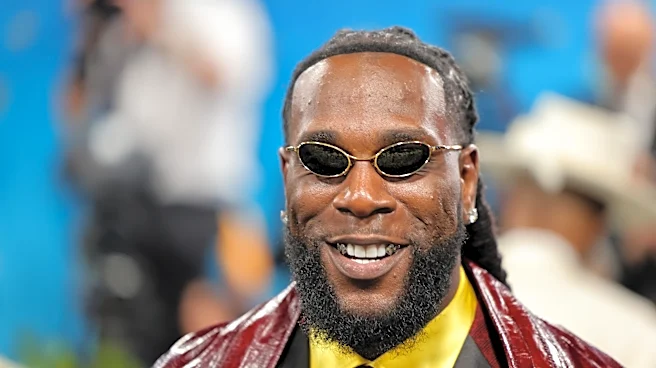
Nigerian artist Burna Boy has disclosed that Toni Braxton receives 60% of the streaming royalties from his 2022 hit song, 'Last Last.' This significant royalty share is attributed to the song's sampling of Braxton's 2000 classic, 'He Wasn’t Man Enough.'
The revelation highlights the enduring financial impact of music sampling, where older works continue to generate substantial income for original artists decades after their initial release. Burna Boy's 'Last Last' gained considerable popularity, making the 60% royalty share a notable income stream for Braxton. This arrangement underscores the legal and financial agreements common in the music industry when one artist incorporates elements of another's work into their own.
Why It's Important?
This disclosure is important for several reasons within the U.S. music industry and for artists globally. Firstly, it illustrates the long-term financial benefits that can accrue to artists whose work is sampled, emphasizing the value of intellectual property in music. For Toni Braxton, this means her music from over two decades ago continues to be a significant source of income, demonstrating the potential for catalog longevity and passive revenue. Secondly, it sheds light on the often-complex royalty structures and negotiations involved in music sampling. Such agreements can significantly impact the profitability of new releases for the sampling artist while providing a steady revenue stream for the sampled artist. This case could also serve as a precedent or example for other artists considering sampling or being sampled, highlighting the potential for substantial financial arrangements.
What's Next?
The revelation about Toni Braxton's substantial royalty share from 'Last Last' is likely to spark further discussion within the music industry regarding fair compensation for sampled works. It may encourage more transparency in sampling agreements and could influence future negotiations between artists and their legal teams. For artists whose work is frequently sampled, this could lead to a re-evaluation of their catalog's potential for generating ongoing revenue. Additionally, it might prompt a closer look at the legal frameworks surrounding music sampling, potentially leading to clearer guidelines or industry standards for royalty distribution. The continued success of 'Last Last' will directly translate into sustained earnings for Braxton, reinforcing the financial power of well-placed samples.
Beyond the Headlines
Beyond the immediate financial implications, this situation touches upon broader themes of artistic legacy and the interconnectedness of musical generations. Toni Braxton's continued earnings from a song released over two decades ago underscore the timeless nature of certain musical compositions and their ability to resonate with new audiences through contemporary interpretations. It also highlights the cultural exchange inherent in sampling, where new artists pay homage to and revitalize older works, introducing them to a new generation of listeners. This practice not only provides financial benefits but also contributes to the preservation and evolution of musical heritage, demonstrating how past and present artists can mutually benefit from creative collaboration, even if indirect.