
What's Happening?
Pixar Animation Studios is exploring the possibility of a sixth 'Toy Story' film, following the significant box office success of 'Toy Story 5,' which grossed $1.15 billion. Producer Lindsey Collins indicated
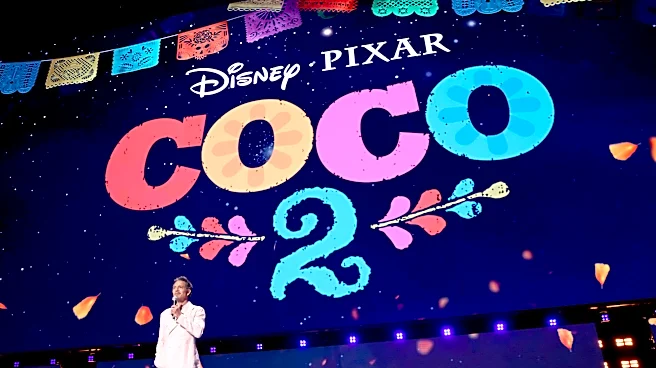
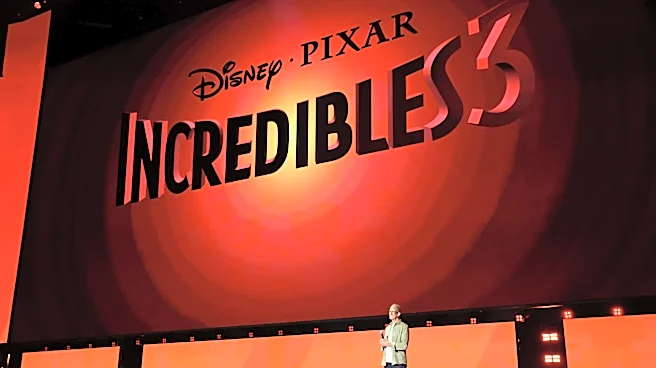
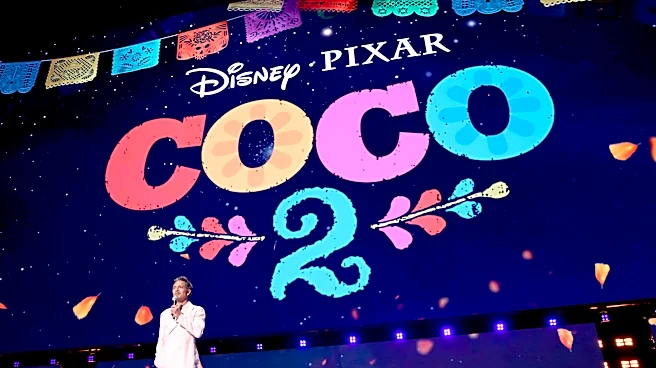
that Pixar has moved past declaring the franchise finished, acknowledging that previous sequels were unexpected. Collins views the existing five films as two distinct trilogies: the first three centered on Andy's story, and the subsequent films, including 'Toy Story 5,' focusing on Bonnie. Director Andrew Stanton supports this perspective, aiming to provide Bonnie's narrative with a complete and satisfying conclusion, similar to Andy's. While no official announcement for 'Toy Story 6' has been made, filmmakers are discussing potential story directions. Voice actor Tom Hanks, who portrays Woody, expressed openness to returning only if the new installment offers a 'worthwhile,' 'great,' and 'fresh' theme, rather than merely extending the franchise for commercial reasons. Pixar currently has other projects in development, including 'Gatto,' 'Ghost Market,' 'Incredibles 3,' and 'Coco 2,' suggesting a potential 'Toy Story 6' would not be released until 2030 at the earliest.
Why It's Important?
The potential for a 'Toy Story 6' highlights Pixar's strategy to balance creative integrity with commercial success in the highly competitive animation industry. The 'Toy Story' franchise has consistently demonstrated its ability to resonate with audiences by exploring themes of growth, friendship, and change, making it a significant revenue generator for Disney. A sixth film, if executed with a compelling narrative as suggested by Collins and Stanton, could further solidify the franchise's legacy and appeal to new generations while retaining its established fanbase. However, the emphasis on a 'worthwhile' and 'fresh' theme, as articulated by Tom Hanks, underscores the challenge of maintaining quality and avoiding franchise fatigue. The success of such a project would reinforce the value of strong storytelling in animation, potentially influencing other studios to invest in character-driven narratives rather than solely relying on brand recognition. Conversely, a poorly received sequel could dilute the brand's prestige and impact future box office performance for Pixar and Disney.
What's Next?
Pixar's immediate focus remains on its announced slate of original animated films and sequels, including 'Gatto,' 'Ghost Market,' 'Incredibles 3,' and 'Coco 2.' Any development on 'Toy Story 6' would likely follow these projects, with a potential release date not before 2030. The studio will need to carefully consider the narrative direction to ensure it aligns with the filmmakers' vision of completing Bonnie's trilogy and meets the high creative standards set by previous installments. Discussions with key voice actors, such as Tom Hanks, will be crucial to secure their involvement and ensure the authenticity of the characters. The decision to proceed will also weigh the commercial viability of another sequel against the creative imperative to deliver a meaningful story. The animation industry will closely watch Pixar's approach, as it could set a precedent for how long-running, successful franchises are managed in an evolving entertainment landscape.
Beyond the Headlines
The ongoing discussion around a potential 'Toy Story 6' reflects a broader trend in Hollywood where successful intellectual properties are continually revisited. This practice, while lucrative, raises questions about creative sustainability and the potential for artistic stagnation. Pixar's internal debate, as evidenced by Tom Hanks's comments, highlights the tension between corporate business interests and the desire for artistic merit. The idea of structuring the franchise into distinct trilogies (Andy's and Bonnie's) suggests a conscious effort to provide narrative closure and avoid endless, directionless sequels. This approach could serve as a model for other studios grappling with how to extend beloved franchises without compromising their original appeal. Furthermore, the success of 'Toy Story' films, even after multiple installments, underscores the enduring power of animation to explore complex human emotions and experiences, making it a vital medium for storytelling in contemporary culture.