






What's Happening?
Smart scales are advanced digital bathroom scales that employ Bioelectrical Impedance Analysis (BIA) to provide a wide array of health metrics beyond just body weight. These devices send a weak, imperceptible electrical current through the body to measure
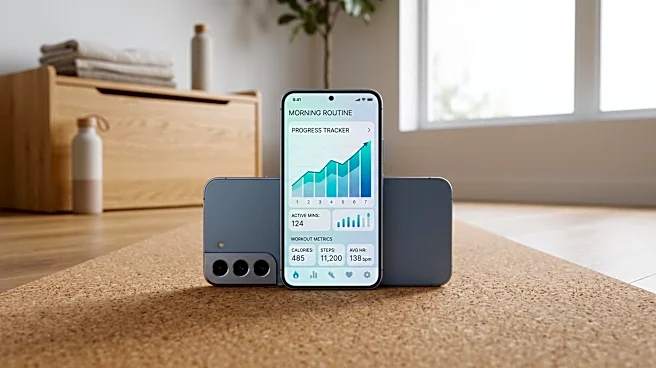
resistance, from which key figures like body fat percentage, muscle mass, body water, bone mass, and visceral fat are calculated. Many smart scales also integrate heart rate monitoring. A core feature of these scales is their companion app, which offers a user-friendly interface to present data in charts, track long-term trends, and manage multiple user profiles. For instance, the Sparoma ADL-26Black captures 13 different health indicators and syncs with the OKOK app, making it suitable for multi-person households. Accuracy is a critical factor, with high-quality sensors providing precise measurements, though results can be influenced by factors like hydration levels.
Why It's Important?
The evolution of smart scales signifies a shift in personal health monitoring, moving beyond simple weight tracking to offer detailed insights into body composition. This is particularly important for individuals pursuing specific fitness goals, such as muscle building or weight loss, as it provides a more holistic view of progress. The ability to track multiple users separately within a single device, as exemplified by models like the Sparoma ADL-26Black, makes these scales practical for families and shared living situations, promoting collective health awareness. While not medical diagnostic tools, their capacity to monitor trends over time empowers users to make informed decisions about their lifestyle and fitness routines. The integration with smartphone apps further enhances accessibility and data management, allowing for continuous self-assessment and goal adjustment.
What's Next?
The future of smart scales is likely to involve continued advancements in sensor technology, leading to even greater accuracy and a broader range of measurable health indicators. Integration with other smart health devices and platforms could create a more interconnected ecosystem for personal health management, offering a comprehensive view of an individual's well-being. There may also be a focus on enhancing the predictive capabilities of these devices, using collected data to offer personalized health recommendations or early warnings for potential health issues. As awareness of body composition and personalized health grows, the demand for sophisticated yet user-friendly smart scales is expected to increase, driving further innovation in this sector. Additionally, ongoing research into the reliability of BIA technology will likely lead to refinements in how these devices interpret and present data.
Beyond the Headlines
The widespread adoption of smart scales raises several deeper implications, particularly concerning data privacy and the interpretation of health information. As these devices collect sensitive personal health data, ensuring robust data security and transparent privacy policies becomes paramount. Users must be aware of how their data is stored, shared, and utilized. Furthermore, while smart scales provide valuable insights, it's crucial to understand their limitations as non-medical devices. Over-reliance on these metrics without professional medical guidance could lead to misinterpretations or unnecessary anxiety. The ethical dimension also extends to the potential for these devices to contribute to body image issues if not used with a balanced perspective. Culturally, the integration of such technology into daily routines reflects a growing societal emphasis on quantifiable self-improvement and personalized health, potentially reshaping how individuals perceive and manage their physical well-being.