






What's Happening?
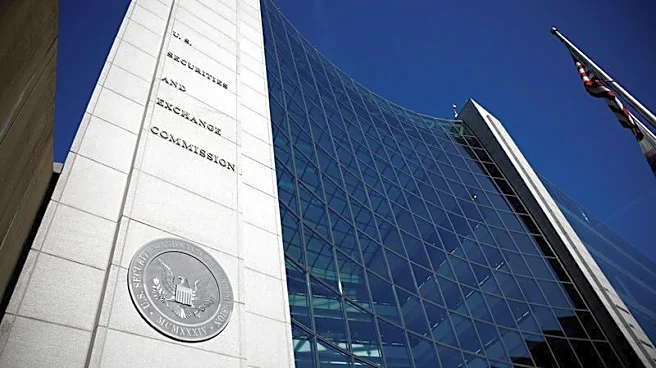
The U.S. Securities and Exchange Commission (SEC) has proposed Regulation Crypto Assets, a new framework designed to regulate certain investment contracts involving crypto assets. This proposal aims to create a tailored regulatory environment while maintaining
existing antifraud and antimanipulation protections. If adopted, it would introduce two exemptions from registration under the Securities Act of 1933: a 'Startup Exemption' for offerings up to $5 million over four years, and a 'Fundraising Exemption' with two tiers, allowing offerings of up to $20 million or $75 million over a 12-month period, depending on the tier. Both exemptions would require adherence to antifraud provisions and principles-based disclosure requirements, with Tier 2 offerings also mandating audited financial statements. Additionally, the proposal includes a conditional safe harbor from the definition of an 'investment contract,' allowing issuers to certify to the SEC that they have ceased essential managerial efforts, potentially changing the securities-law treatment of a crypto asset as its underlying network or platform develops. The SEC's proposal also defines a 'qualified purchaser' for Regulation Crypto Assets, which would preempt state securities-law registration requirements for covered investment contracts and certain secondary-market transactions. Public comments on the proposal are due by October 20, 2026.
Why It's Important?
This proposed regulation is a significant step by the SEC to bring clarity and structure to the rapidly evolving crypto asset market in the U.S. The introduction of specific exemptions for startup and fundraising activities could provide a clearer path for blockchain projects to secure public funding, potentially fostering innovation within the digital asset space. By establishing a conditional safe harbor, the SEC acknowledges the dynamic nature of crypto assets and their potential to evolve beyond initial investment contract classifications, offering a mechanism for projects to transition out of certain regulatory obligations as they mature. The preemption of state securities laws for qualified purchasers could streamline the regulatory landscape, reducing complexity and potential conflicts for issuers operating across different states. This move reflects a broader effort to integrate crypto assets into the existing financial regulatory framework, aiming to protect investors while accommodating technological advancements. The proposal builds on the SEC’s March 2026 interpretive guidance, indicating a consistent and developing approach to crypto asset regulation.
What's Next?
Crypto asset issuers and other market participants are encouraged to evaluate the potential implications of Regulation Crypto Assets. Key considerations include assessing whether planned or ongoing crypto asset offerings fall within the proposal's scope, understanding the requirements of the proposed startup and fundraising exemptions, and preparing for applicable disclosure, financial statement, and audit obligations. Issuers should also analyze the conditions of the proposed investment contract safe harbor and its potential impact on their projects, as well as the state-law implications for covered investment contracts and secondary-market transactions. The public comment period, which closes on October 20, 2026, provides an opportunity for stakeholders to submit feedback to the SEC, influencing the final shape of the regulation. Following the comment period, the SEC will review the feedback and may revise the proposal before its potential adoption, which would then establish a new regulatory framework for crypto asset offerings in the United States.
Beyond the Headlines
The SEC's proposal for Regulation Crypto Assets highlights a critical tension between fostering innovation in emerging technologies like blockchain and ensuring robust investor protection within established securities laws. The concept of a 'conditional safe harbor' is particularly noteworthy, as it attempts to address the unique lifecycle of crypto projects, where an asset might initially function as an investment contract but later evolve into a more utility-driven token. This approach could set a precedent for how regulators globally grapple with the evolving nature of digital assets. Furthermore, the preemption of state securities laws for qualified purchasers underscores a move towards a more unified federal approach to crypto regulation, potentially reducing regulatory fragmentation. The emphasis on antifraud provisions and disclosure requirements reflects the SEC's ongoing commitment to market integrity, even as it adapts to new asset classes. This regulatory development could influence the design and operational models of future blockchain projects, pushing them towards greater transparency and compliance from their inception.