







What's Happening?
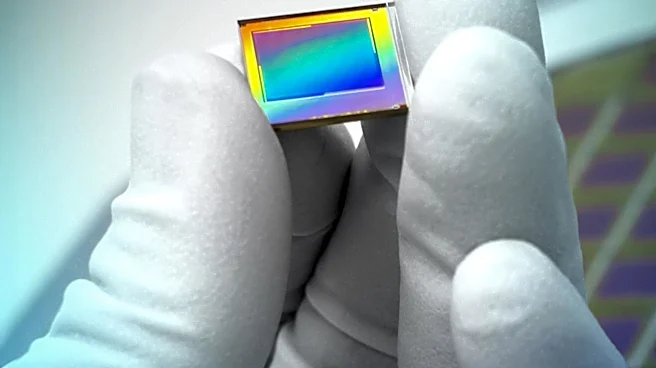
Guardtech and DryR have formed a strategic partnership to provide advanced controlled environment solutions for industries requiring high precision, such as semiconductor, micro-electronics, and battery manufacturing. Guardtech, known for its expertise
in cleanroom construction, and DryR, specializing in humidity and climate control technologies, are combining their strengths to deliver integrated solutions. These solutions are designed to maintain stable environments with precise control over humidity, temperature, and overall room conditions, which are critical for sensitive manufacturing processes. The collaboration aims to support the next generation of advanced manufacturing infrastructure by offering scalable cleanroom and dry room solutions. This partnership is particularly significant as demand grows in sectors like semiconductor and EV battery production, where environmental precision is crucial.
Why It's Important?
The partnership between Guardtech and DryR is significant for the U.S. high-tech manufacturing sector, which relies heavily on controlled environments to ensure product quality and operational efficiency. By enhancing environmental precision, the collaboration can lead to improved energy efficiency and reduced operational costs, benefiting industries such as pharmaceuticals, aerospace, and medical devices. The ability to maintain ultra-low humidity and stable conditions is essential for processes like lithium battery production and semiconductor fabrication, which are critical to the U.S. economy. As these industries expand, the need for advanced cleanroom solutions will grow, positioning Guardtech and DryR as key players in supporting technological advancements and infrastructure development.
What's Next?
As the demand for high-performance cleanroom solutions increases, Guardtech and DryR are likely to expand their collaboration to include more industries and applications. The partnership may explore further innovations in environmental control technologies to meet the evolving needs of high-tech manufacturing. Additionally, the companies might engage in more projects that demonstrate the effectiveness of their integrated solutions, potentially leading to new business opportunities and partnerships. Stakeholders in the semiconductor and battery manufacturing sectors will be closely monitoring the outcomes of this collaboration, as it could set new standards for environmental precision and efficiency in controlled environments.