





What's Happening?
Japanese Canadian recipe developer Lisa Kitahara has achieved viral success with her egg katsu recipe, a panko-crusted fried egg dish. Despite her initial low expectations for its popularity, an Instagram video showcasing the recipe is nearing 10 million
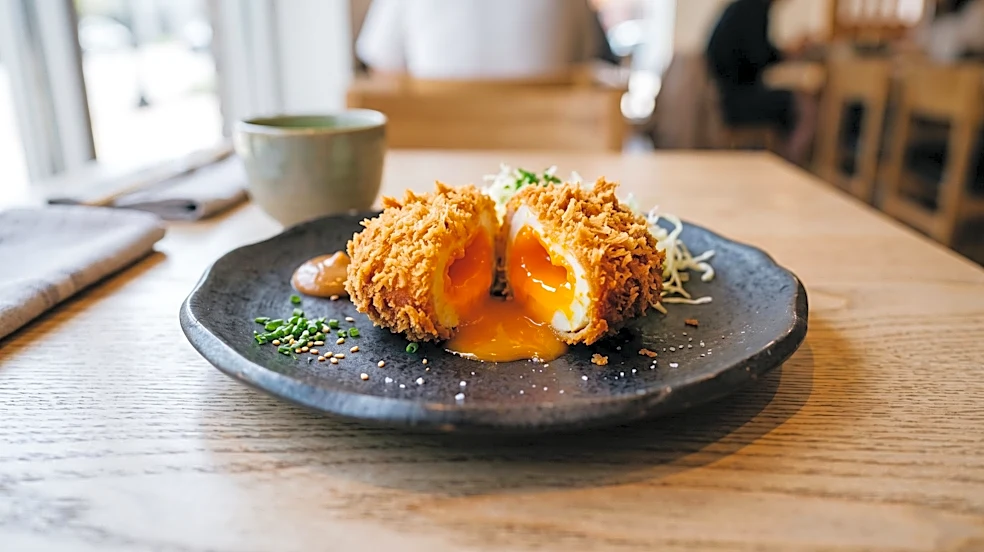
views, with an additional four million views on TikTok. Kitahara, known for her interest in fried foods, independently developed this simple recipe, which requires only two ingredients and cooking oil. The dish is celebrated for its textural contrast: a crunchy exterior, tender whites, and a rich, molten yolk. The concept of katsu-style eggs first gained traction in Japan in 2013 through a recipe contest, where Kaori Kosugi won for her 'Egg Fry' recipe, which also involved frying a raw egg encased in panko.
Why It's Important?
The viral success of Lisa Kitahara's egg katsu highlights the significant influence of social media platforms like Instagram and TikTok in popularizing culinary trends and recipes. This phenomenon demonstrates how simple, visually appealing, and unique food concepts can rapidly capture a global audience, transforming niche dishes into widespread sensations. For home cooks, it offers an accessible and intriguing recipe that provides a novel twist on familiar ingredients. The dish's appeal lies in its ability to deliver maximum textural contrast and a visually satisfying 'yolk-oozing reveal,' elements that resonate strongly with online food communities. This trend also underscores the power of individual creators to drive culinary innovation and engagement outside traditional media channels.
What's Next?
Following the immense popularity of her egg katsu, Lisa Kitahara is likely to see continued engagement with her Japanese cooking site, Okonomi Kitchen, and her social media channels. The viral nature of the recipe could inspire other food content creators to develop and share similar innovative, yet simple, egg-based dishes, potentially leading to new culinary trends. Restaurants might also consider incorporating egg katsu or variations of it into their menus, especially given its appeal to a broad audience. Kitahara herself has suggested various applications for the dish, such as serving it with eggs Benedict, garlic noodles, Japanese curry, or even mapo tofu, indicating potential for further recipe development and culinary exploration.
Beyond the Headlines
The success of egg katsu transcends mere recipe popularity, touching upon broader cultural and economic implications. It exemplifies the ongoing globalization of food, where dishes originating from one culture are reinterpreted and embraced by diverse audiences worldwide, often facilitated by digital platforms. The dish's simplicity and 'magic trick' quality make it highly shareable and engaging, tapping into a desire for both comfort food and culinary novelty. This trend also reflects a shift in how culinary expertise is perceived and disseminated, with independent recipe developers like Kitahara gaining significant influence alongside established chefs and food media. Furthermore, the emphasis on visual appeal, particularly the 'yolk-oozing reveal,' underscores the aestheticization of food in the digital age, where presentation is as crucial as taste for viral success.