







What's Happening?
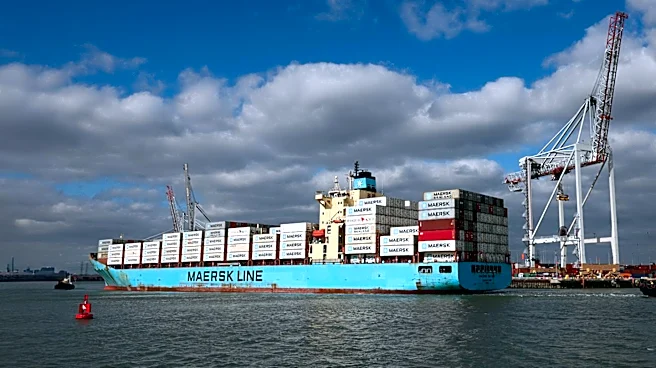
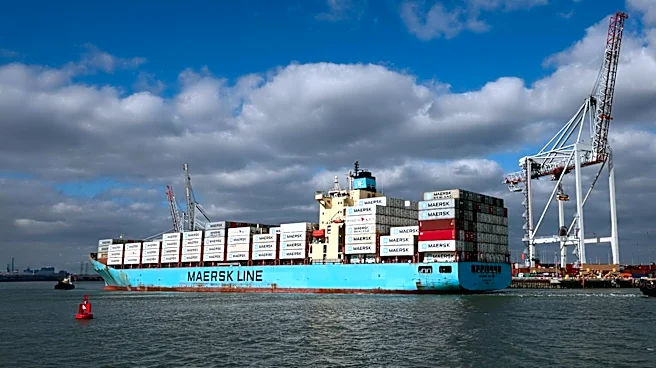
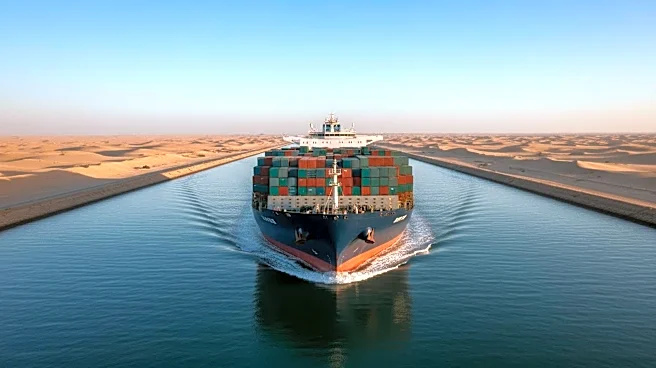
Maersk has announced the resumption of a second route through the Suez Canal and Red Sea, utilizing U.S.-flagged vessels. This decision marks a significant step in the company's gradual return to the trans-Suez corridor, which was previously abandoned
in 2023 due to security threats from the Houthis. The Maersk Denver and Maersk Chicago are set to make the first westbound and eastbound transits, respectively, improving transit times by an average of 7 to 14 days. This move is part of Maersk's strategy to enhance its service offerings and manage capacity more effectively, as the company continues to monitor the security situation in the region.
Why It's Important?
The resumption of the Suez-Red Sea route by Maersk is significant for the global shipping industry, particularly in terms of capacity management and transit efficiency. By reducing transit times, Maersk can offer more competitive services, potentially increasing its market share. This move also alleviates some of the capacity constraints that have been affecting the container shipping sector, as longer routes around South Africa had previously occupied excess capacity. The decision to resume these routes reflects a cautious optimism about the security situation in the region, which could influence other carriers' decisions to follow suit.
What's Next?
As Maersk resumes its operations through the Suez-Red Sea corridor, the company will likely continue to assess the security situation and adjust its routes accordingly. The return of these routes is expected to free up capacity, which could lead to further adjustments in the shipping industry's dynamics. Other carriers may also consider resuming their routes through the Suez Canal, depending on the security developments and market conditions. Additionally, the ongoing addition of new vessels to the sector could further impact capacity and competition.