



What's Happening?
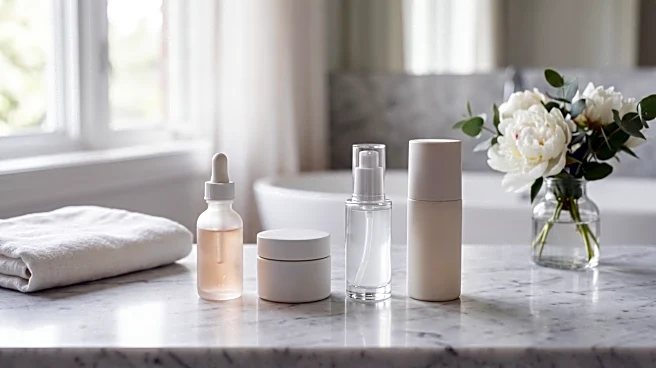
The beauty industry is seeing a significant shift towards 'skinimalism' as the dominant trend for 2026. This approach advocates for using fewer skincare and makeup products to achieve healthier, calmer skin and a more natural appearance. Instead of layering
multiple serums and creams, skinimalism encourages the use of multitasking products, such as tinted moisturizers with SPF, lip-and-cheek creams, or serums that offer both hydration and brightening benefits. This trend aims to reduce product consumption, minimize waste, and simplify daily beauty routines. The emphasis is on enhancing natural skin rather than concealing it with numerous layers of makeup. For individuals new to beauty trends, skinimalism is recommended as an accessible starting point due to its simplicity and immediate visual impact.
Why It's Important?
The rise of skinimalism reflects a broader consumer desire for authenticity, sustainability, and efficiency within the beauty sector. This trend could significantly impact the U.S. beauty market by shifting consumer purchasing habits away from extensive product lines towards more concentrated, multi-functional items. Beauty brands may need to adapt their product development and marketing strategies to align with this minimalist philosophy, potentially leading to a reduction in the sheer volume of new product launches and a greater focus on ingredient efficacy and versatility. Consumers stand to gain from simplified routines, reduced expenditure on beauty products, and potentially improved skin health due to less product overload. Conversely, companies heavily reliant on selling numerous single-purpose products might face challenges in adapting to this evolving market preference.
What's Next?
As skinimalism gains traction, beauty brands are likely to innovate by developing more sophisticated multi-tasking formulations that deliver multiple benefits in a single product. We can anticipate an increase in demand for hybrid products that combine skincare and makeup properties, such as serums with tint or moisturizers with added treatment ingredients. Retailers may also adjust their merchandising to highlight these versatile products. Furthermore, beauty influencers and media outlets are expected to further popularize skinimalism through tutorials and endorsements, reinforcing its status as a mainstream beauty philosophy. This trend could also spur greater consumer education on ingredient efficacy and the benefits of a streamlined routine, potentially leading to a more informed and discerning beauty consumer base.
Beyond the Headlines
Skinimalism represents more than just a beauty trend; it signifies a cultural shift towards mindful consumption and a rejection of excessive routines. This movement aligns with broader societal values emphasizing sustainability and well-being, encouraging individuals to embrace their natural appearance rather than striving for an idealized, heavily made-up look. Ethically, it promotes less waste in the beauty industry, addressing concerns about environmental impact. Psychologically, it could foster greater self-acceptance and reduce the pressure to conform to unrealistic beauty standards often perpetuated by social media. This shift may also influence other lifestyle areas, encouraging a minimalist approach to fashion, home decor, and overall consumption patterns, reflecting a desire for simplicity and authenticity in various aspects of life.