








What's Happening?
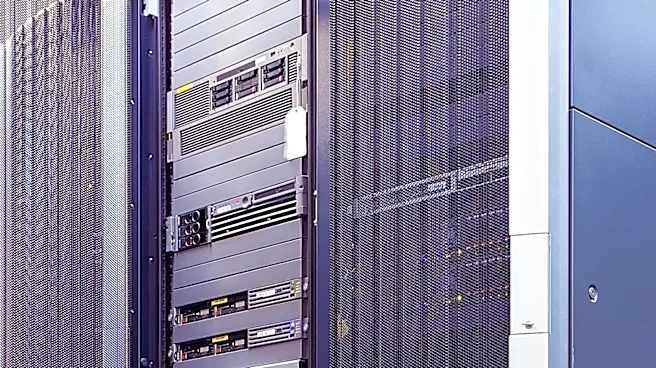
A new report by PwC projects that global investment in artificial intelligence (AI) infrastructure is set to reach $31.6 trillion by 2050. This substantial capital expenditure is driven by the need to build computing capacity for AI models and to continuously
upgrade technology as it advances. The report estimates that annual data center investment will increase from approximately $800 billion in 2026 to $1.8 trillion per year by 2050. The Americas are expected to account for $16.5 trillion of this total investment, with the U.S. alone contributing about $15.1 trillion, or roughly 48% of the global cumulative capital expenditure. This projection places the U.S. at the forefront of AI infrastructure development, largely due to its advanced chip ecosystem, leading AI model developers, hyperscalers, and AI-native businesses.
Why It's Important?
This projected investment signifies a massive economic shift and highlights the critical role AI infrastructure will play in the global economy. For the U.S., leading this investment means solidifying its position as a global technology superpower, fostering innovation, and creating numerous high-tech jobs. The substantial capital flow into data centers and related technologies will boost various sectors, including construction, energy, and manufacturing. However, this rapid expansion also presents challenges, such as increased demand for energy and potential strains on existing infrastructure. The report also notes that the 'AI buildout is not a rising tide that will naturally lift all boats,' indicating that strategic positioning and active investment are crucial for countries and companies to capitalize on this growth. The concentration of investment in the U.S. could further widen the technological gap between leading nations and others, impacting global economic competitiveness and technological sovereignty.
What's Next?
The coming decades will likely see an accelerated buildout of AI infrastructure, with significant implications for various industries. Companies will continue to invest heavily in data centers and advanced computing capabilities, driving demand for specialized hardware, software, and skilled labor. Governments, particularly in the U.S., may implement policies to support this growth, including incentives for research and development, infrastructure development, and talent acquisition. The report suggests that the Americas, especially the U.S., will continue to attract talent, capital, and new ventures, further cementing its lead in the AI sector. However, other regions like Asia-Pacific and Europe will also see substantial, though comparatively smaller, investments. The challenges of power consumption, real estate, supply chains, and regulation will need to be addressed as this expansion continues, potentially leading to new innovations in energy efficiency and sustainable infrastructure development.
Beyond the Headlines
The massive investment in AI infrastructure has profound implications beyond economic growth. Ethically, the concentration of AI power in a few leading nations, particularly the U.S., raises questions about global equity, access to advanced technology, and potential digital divides. The sheer scale of data centers required will also have significant environmental impacts, particularly concerning energy consumption and carbon footprint, necessitating a focus on renewable energy sources and sustainable practices. Legally, the rapid advancement of AI will likely necessitate new regulatory frameworks concerning data privacy, algorithmic bias, and the responsible deployment of AI technologies. Culturally, the pervasive integration of AI into daily life, powered by this infrastructure, will reshape how societies function, interact, and innovate. The report's emphasis on the U.S. lead in AI infrastructure also underscores the geopolitical significance of technological dominance, potentially influencing international relations and power dynamics for decades to come.