





What's Happening?
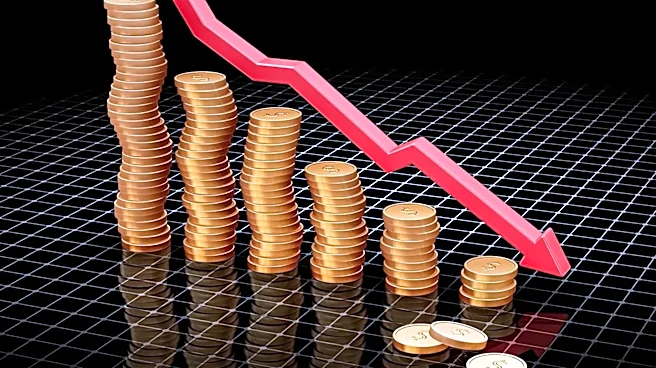
GameStop's stock experienced a significant drop of 12.3% following the company's announcement of a private exchange of $1.4 billion in convertible senior notes for its Class A common stock. This exchange involves $400 million of zero-coupon notes due
in 2030 and $1 billion of notes due in 2032. The move is intended to reduce GameStop's long-term debt by approximately $1.4 billion. However, the decision has raised concerns among investors about potential dilution, leading to a sharp decline in the stock price. The stock fell below its 20-day moving average, indicating potential continued bearish momentum.
Why It's Important?
The exchange of convertible notes for equity is a strategic move by GameStop to manage its debt without raising cash. While this reduces the company's liabilities, it introduces significant dilution risk for existing shareholders. The issuance of new shares could lead to a decrease in the value of existing shares, as the market adjusts to the increased supply. This development is crucial for investors and stakeholders as it reflects the ongoing challenges GameStop faces in stabilizing its financial position amid a shifting retail landscape. The lack of Wall Street coverage further complicates the valuation and investment decisions for shareholders.
What's Next?
The exchange is expected to close around September 23, after which the exchanged notes will be canceled, effectively reducing GameStop's debt. The number of shares to be issued will be determined based on the average volume-weighted price of GameStop's stock over a 35-day period starting August 3. Investors will be closely monitoring the stock's performance and any strategic moves by GameStop to address its core business challenges, including the shift towards digital downloads and subscription models.