







What's Happening?
The Holkham Farming Company in the UK is conducting a pioneering field-scale trial of liquid green fertiliser, in collaboration with Omex Agriculture. This initiative is part of Holkham's broader objective to become carbon negative by 2040. The trial involves
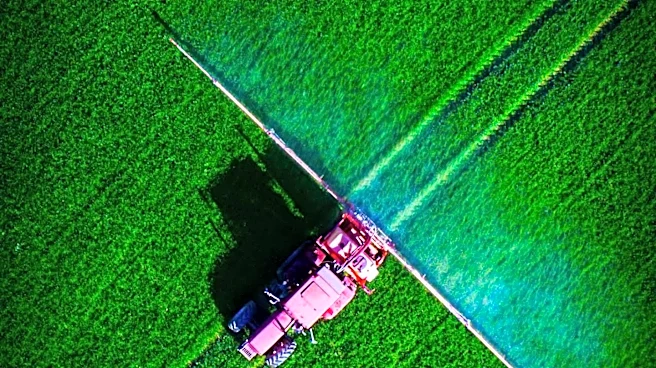
using LoC Green fertiliser, which is produced using renewable energy sources like solar and wind, on a 14-hectare sugar beet crop. The fertiliser aims to reduce the carbon footprint by 70% compared to conventional fertilisers. The trial seeks to demonstrate that low-carbon nitrogen can deliver the same agricultural output as traditional nitrogen fertilisers. Despite the environmental benefits, the higher cost of green fertilisers remains a barrier to widespread adoption. Holkham is absorbing these costs as part of its innovation strategy, with hopes that the market will eventually support these expenses.
Why It's Important?
This trial is significant as it addresses the agricultural sector's need to reduce carbon emissions, which are largely driven by nitrogen fertilisers. By demonstrating the viability of green fertilisers, Holkham aims to lead the way in sustainable farming practices. The success of this trial could encourage other farms to adopt similar practices, potentially leading to a significant reduction in the agricultural sector's carbon footprint. However, the higher cost of green fertilisers poses a challenge, as it could deter widespread adoption unless the market begins to reward lower-carbon farming practices. The trial also highlights the importance of collaboration between growers, processors, and fertiliser manufacturers to achieve environmental goals.
What's Next?
The next steps involve scaling the technology beyond small-scale trials to achieve wide-scale adoption. This will require collaboration across the supply chain to drive down costs and make green fertilisers more accessible. Holkham plans to extend the trial to other crops, including malting barley, with the aim of supplying carbon-negative barley to breweries. The industry must also explore hybrid fertiliser options that blend green and grey formulations to offer partial carbon reductions at a lower cost. As the market gradually starts to reward greener technologies, more support will be needed to encourage growers to invest in low-carbon fertilisers.