



What's Happening?
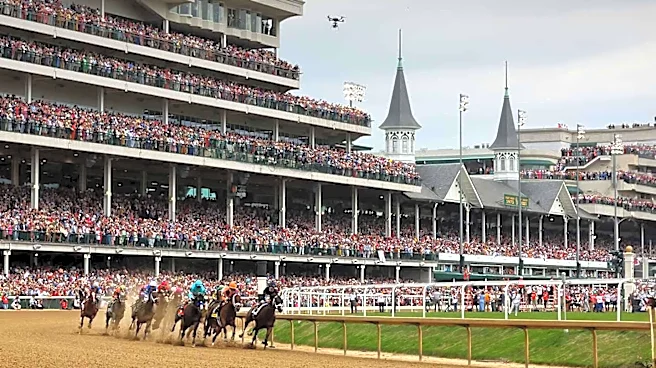
Race 2 at Churchill Downs, a juvenile maiden special weight event, was declared a no contest after a multi-horse spill. The incident involved six horses losing their jockeys, with three jockeys, Martin Garcia, Walter Rodriguez, and Cristian Torres, transported
to UofL Hospital as a precaution. Three of the affected horses, Lutkenhaus, Shacklebolt, and Industrious, were loaded onto an equine ambulance. Other jockeys involved, Francisco Arrieta and Keith Asmussen, either took off subsequent mounts or returned to the saddle later in the day. Keith Asmussen later confirmed on his X account that he was unharmed. The race had a field of 10 horses lining up before the incident occurred.
Why It's Important?
This incident highlights the inherent risks involved in horse racing for both jockeys and horses. The immediate medical attention and transportation of injured jockeys and horses underscore the safety protocols in place, but also bring to light the potential for severe consequences in a sport that involves high speeds and close proximity. Such events can lead to increased scrutiny from animal welfare organizations and racing authorities, potentially influencing future safety regulations, track conditions, or race scheduling. For the racing industry, 'no contest' declarations can impact betting outcomes, race statistics, and the overall perception of the sport's integrity and safety, affecting fan engagement and financial aspects.
What's Next?
Further updates are expected as more information becomes available regarding the condition of the injured jockeys and horses. Racing authorities at Churchill Downs will likely conduct an investigation into the cause of the spill to determine if any factors, such as track conditions or rider error, contributed to the incident. Depending on the findings, there could be adjustments to safety protocols, jockey training, or track maintenance procedures. The affected jockeys and horses will undergo recovery, with their return to racing dependent on medical clearance. The incident may also prompt discussions within the racing community about enhancing safety measures to prevent similar occurrences in the future.
Beyond the Headlines
Beyond the immediate impact on the race and participants, this event could reignite broader conversations about the ethics and safety of horse racing. Critics often point to such incidents as evidence of the sport's dangers, advocating for stricter regulations or even its abolition. Conversely, proponents of racing emphasize the efforts made to ensure safety and the economic contributions of the industry. The incident could also influence public perception, potentially affecting attendance, sponsorship, and legislative support for racing. The long-term well-being of retired racehorses and jockeys, particularly those who sustain career-ending injuries, remains a significant concern that events like this bring into sharper focus.