







What's Happening?
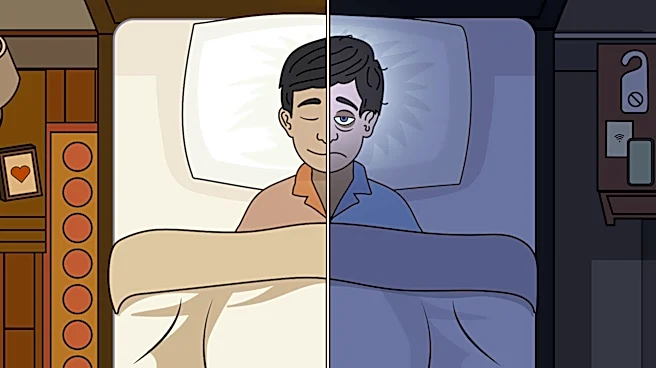
A new approach to sleep preparation emphasizes the importance of gradually transitioning from high activity to rest, rather than abruptly trying to sleep. This method involves a series of 'downshifts' in activity levels throughout the evening. The process
begins with engaging in moderate activities like exercise or social interactions, followed by less stimulating tasks such as cooking or light chores, and finally, calming activities like breathwork or gentle stretching before bed. This gradual reduction in activity helps the nervous system to slow down, making it easier to fall asleep and stay asleep. The approach suggests that sleep should not be treated as a performance task but as a natural transition, with the bedroom environment reinforcing this final stage of relaxation.
Why It's Important?
This sleep preparation strategy is crucial as it addresses common issues related to insomnia and poor sleep quality. By focusing on a gradual transition to sleep, individuals can potentially improve their sleep patterns, leading to better overall health and well-being. This method challenges the conventional approach of using supplements or gadgets to induce sleep, instead promoting a more natural and sustainable routine. The emphasis on creating a conducive sleep environment and reducing pre-sleep stimulation can help mitigate sleep disorders and enhance recovery, ultimately benefiting mental and physical health.