








What's Happening?
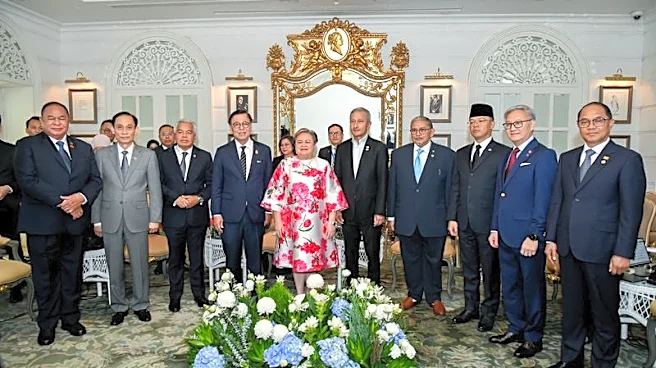
Takeda, a global biopharmaceutical company, has announced a significant collaboration with the Indonesian government to bolster the country's healthcare resilience through the development of plasma-derived medicinal products (PDMPs). This partnership
involves the Ministry of Health of Indonesia granting Takeda a plasma fractionation license, allowing the company to collect and process plasma as part of a multi-phased initiative. Takeda plans to invest up to $30 million in a pilot program to establish a national plasma donation network. This initiative aims to improve access to lifesaving therapies and position Indonesia as a regional hub for plasma science and biopharmaceutical manufacturing. The collaboration builds on Takeda's long-standing presence in Indonesia and is expected to create new employment opportunities and enhance healthcare standards.
Why It's Important?
This collaboration is crucial as it addresses the growing global demand for PDMPs, which are essential for treating various medical conditions. By establishing a robust plasma ecosystem in Indonesia, the initiative aims to ensure sustainable access to these therapies, not only for Indonesian patients but also for the broader ASEAN region. The investment is expected to create highly skilled jobs and support workforce training, contributing to the country's economic development. Additionally, by positioning Indonesia as a regional hub for plasma science, the collaboration could enhance the country's role in the global healthcare supply chain, potentially leading to improved healthcare outcomes and increased economic resilience.
What's Next?
The initial phase of the project involves setting up plasma donation centers in Indonesia, with the first center expected to open in 2027. These centers will adhere to international quality and regulatory standards, leveraging Takeda's global expertise in plasma donation. As the project progresses, Takeda will assess the feasibility of building a state-of-the-art manufacturing facility in Indonesia, which could serve both domestic and international markets. This development could further solidify Indonesia's position as a key player in the global biopharmaceutical industry, while also addressing local healthcare needs.