




What's Happening?
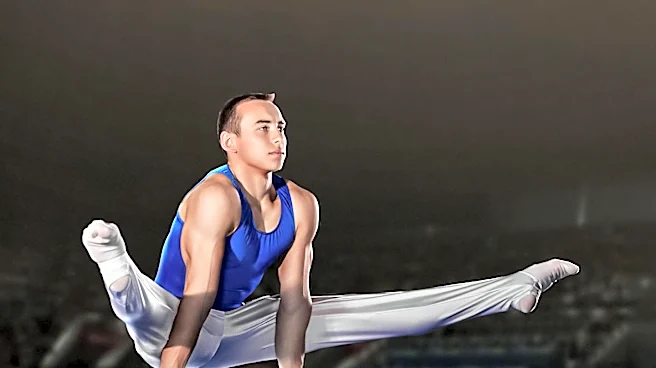
The General Assembly of the European Gymnastics Union has ratified a decision allowing Russian athletes to participate in competitions with their national symbols, including the flag and anthem. This decision follows the lifting of sanctions by the Executive
Committee of European Gymnastics on May 24, and a similar move by the International Gymnastics Federation six days earlier. Despite opposition from 11 national federations, which had requested a ban on Russian symbols, the decision aligns European Gymnastics with World Gymnastics' current policies. The transitional procedure adopted allows for exceptions in cases where host country legislation prohibits the display of Russian state symbols. This decision will impact major international tournaments in Europe, including the World Artistic Gymnastics Championships in Germany and the Netherlands in 2026.
Why It's Important?
The decision to allow Russian symbols in gymnastics competitions is significant as it reflects broader geopolitical tensions and the ongoing debate over the participation of Russian athletes in international sports amidst the Russia-Ukraine conflict. This move could influence other sports federations and their policies regarding Russian participation. It also highlights the challenges faced by international sports organizations in balancing political pressures with the principles of inclusivity and neutrality in sports. The decision may affect the perception of European Gymnastics and its relationship with member federations, potentially leading to further discussions on the role of politics in sports.
What's Next?
As the decision takes effect, it will be crucial to monitor the reactions from various national gymnastics federations and the broader sports community. The upcoming World Artistic Gymnastics Championships in Germany and the Netherlands will serve as a test case for the implementation of this policy. Additionally, the transitional procedure may be scrutinized, especially in countries with legal restrictions on Russian symbols. The decision could prompt other sports organizations to reevaluate their policies on Russian participation, potentially leading to a broader shift in international sports governance.