







What's Happening?
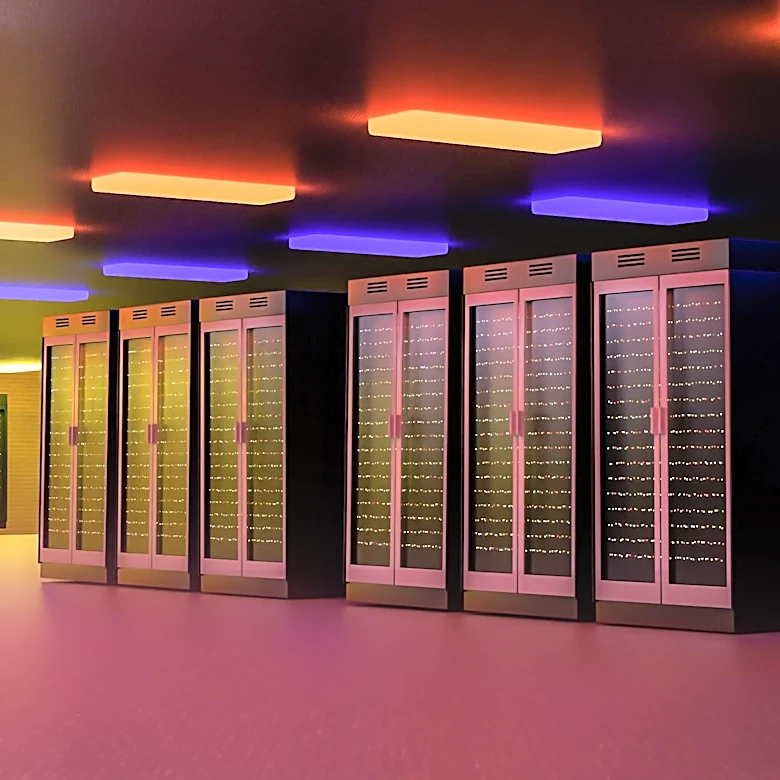
Architects are exploring innovative designs for AI data centers that prioritize community benefits. Forma, a New York-based architecture studio, has proposed the 'Pink Thermal Baths' concept, which envisions a data center in a California desert that heats
a public bathhouse. This idea reflects a broader trend of rethinking data center designs to give back to host communities. The concept challenges traditional data center models by integrating community needs and environmental considerations. As data centers proliferate, especially near residential areas, concerns about noise, energy use, and local impact have grown. Architects like Miroslava Brooks of Forma and Thomas McGoldrick of Gensler are advocating for designs that blend with local environments and offer public amenities.
Why It's Important?
The shift in data center design reflects a growing awareness of the need for sustainable and community-friendly infrastructure. As data centers become integral to digital economies, their environmental and social impacts are under scrutiny. By incorporating community benefits, such as public parks or heated bathhouses, data centers can mitigate negative perceptions and foster local support. This approach aligns with broader sustainability goals and can enhance the social license to operate for tech companies. Moreover, it highlights the potential for architecture to address complex challenges in urban planning and resource management.
What's Next?
Future developments may see more data centers adopting community-centric designs. This could involve collaborations between tech companies, architects, and local governments to ensure that new facilities meet both technological and social needs. As the demand for data processing grows, especially with advancements in AI, the pressure to innovate in data center design will likely increase. Stakeholders may also explore regulatory frameworks that encourage or mandate community benefits as part of data center projects.
Beyond the Headlines
The reimagining of data centers could lead to broader changes in how infrastructure projects are conceived and executed. This trend may inspire other sectors to consider community impacts more deeply, potentially leading to a new era of socially responsible architecture. Additionally, the integration of public amenities into private infrastructure projects could redefine the relationship between corporations and communities, fostering a more collaborative approach to urban development.