
What's Happening?
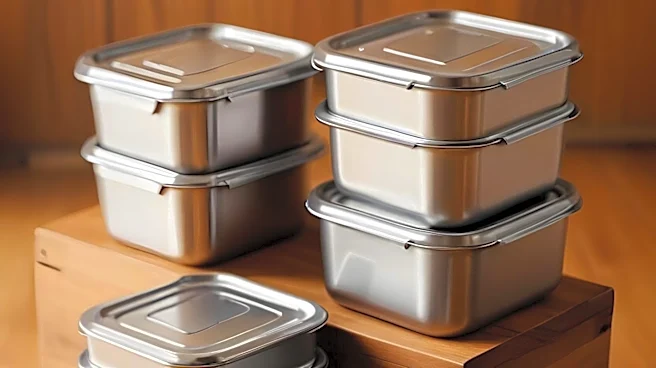
Consumer Reports has identified IKEA's 34-ounce 365+ stainless steel container as the top choice for food storage, surpassing well-known brands like Pyrex, Rubbermaid, and Bentgo. The container received
perfect scores for seal quality, durability, and ease of use. It is versatile, suitable for use in the oven, fridge, and freezer, and can even fit in an air fryer. The container's stainless steel base is priced at $6.99, with a plastic lid costing an additional $2. The lid features a polypropylene seal, making it leakproof and dishwasher-safe. An alternative bamboo lid is available, though it is not leakproof or airtight.
Why It's Important?
The recognition of IKEA's 365+ container by Consumer Reports highlights a shift in consumer preferences towards more versatile and durable food storage solutions. This could influence market dynamics, encouraging other brands to innovate and improve their product offerings. For consumers, this means access to more reliable and cost-effective storage options, potentially reducing food waste and enhancing kitchen efficiency. The affordability and functionality of IKEA's product may also set new standards for value in the homeware industry.
What's Next?
As IKEA's 365+ container gains popularity, other brands may respond by enhancing their product lines to compete. This could lead to increased innovation in the food storage market, with a focus on sustainability and multifunctionality. Consumer Reports' endorsement may also drive increased sales for IKEA, prompting the company to expand its range of kitchenware products. Additionally, consumer feedback on the bamboo lid's limitations could lead to design improvements or new product developments.
Beyond the Headlines
The success of IKEA's 365+ container underscores a growing consumer trend towards minimalism and sustainability in homeware. The product's design reflects a balance between functionality and environmental consciousness, appealing to eco-minded consumers. This trend may encourage other companies to prioritize sustainable materials and practices in their manufacturing processes, potentially leading to broader industry changes.