



What's Happening?
The article evaluates the efficacy of dumbbells versus barbells for beginners aiming to build muscle, concluding that both tools are highly effective, with success largely dependent on safety, consistency, and progressive overload. For novices, dumbbells are often
recommended as an initial choice due to their versatility, ease of scaling, and the ability for each side of the body to work independently. This independent movement is beneficial for identifying and correcting strength imbalances and can offer greater comfort for individuals with varying shoulder mobility. Dumbbells also simplify load selection, allowing beginners to prioritize proper technique with manageable weights. Conversely, barbells are highlighted for their capacity to load compound exercises more heavily and facilitate precise, incremental weight increases, which is advantageous for maximizing strength and tracking progress. The article suggests that the optimal strategy for long-term muscle and strength development involves utilizing both types of equipment.
Why It's Important?
Understanding the distinct benefits of dumbbells and barbells is crucial for beginners to establish an effective and sustainable resistance training program. Selecting the appropriate equipment can significantly influence a beginner's ability to learn correct form, prevent injuries, and maintain motivation. Starting with dumbbells can help build a foundational understanding of movement patterns and body control, which is essential before advancing to heavier barbell lifts. This informed choice helps beginners avoid common pitfalls such as using excessive weight too soon or neglecting unilateral strength. For home-based training, dumbbells often present a more practical solution due to space constraints. Ultimately, the decision impacts not only immediate muscle gain but also the development of balanced strength, coordination, and long-term adherence to a fitness regimen, thereby affecting overall physical health and athletic potential.
What's Next?
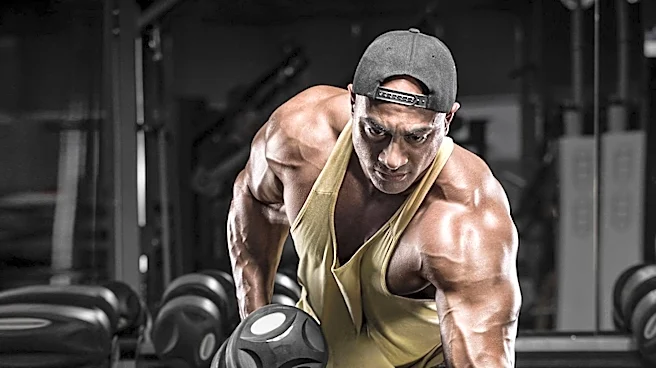
Beginners are advised to commence their training with dumbbells for exercises that facilitate control and independent limb work, or when equipment access is limited. A recommended beginner program might include dumbbell bench presses, one-arm dumbbell rows, goblet squats, and dumbbell Romanian deadlifts. As proficiency and technique improve, individuals can gradually incorporate barbell exercises such as squats, bench presses, deadlifts, or overhead presses, provided these align with their fitness goals and available equipment. The article emphasizes training each major muscle group at least twice weekly, starting with two to three working sets per exercise, and diligently tracking progress. The core principle is to ensure the program is challenging, controlled, and repeatable, with the ultimate objective of progressively overloading the muscles over time.
Beyond the Headlines
The discussion regarding dumbbells versus barbells for beginners delves into fundamental principles of exercise science: progressive overload and training specificity. While both tools effectively stimulate muscle growth, their application can vary based on individual needs, objectives, and physical limitations. This highlights the personalized nature of effective fitness. The emphasis on developing control and addressing unilateral strength with dumbbells before transitioning to barbells reflects a prudent, progressive approach to physical development that prioritizes foundational movement quality. This nuanced understanding can demystify strength training for newcomers, making it less intimidating and more accessible, thereby encouraging broader participation in resistance exercise for long-term health benefits.