






What's Happening?
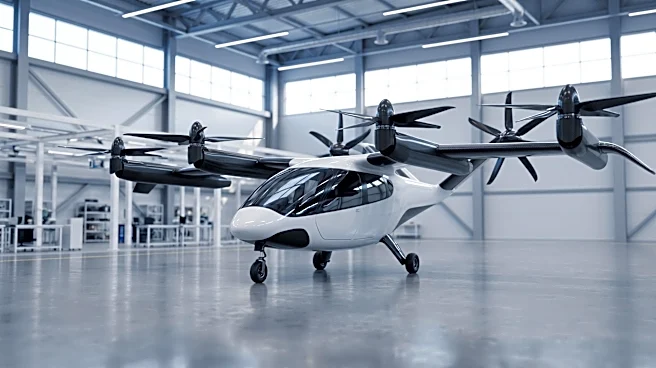
Joby Aviation (JOBY) and Volato Group (SOAR) represent two distinct trajectories within the U.S. aviation and technology sectors. Joby Aviation is a well-capitalized developer of electric vertical takeoff and landing (eVTOL) aircraft, commonly known as
air taxis, and is nearing commercial launch. The company holds a multibillion-dollar valuation and a substantial cash reserve, supporting its multi-year certification and production investments. In contrast, Volato Group, historically a private aviation operator, is undergoing a significant strategic pivot towards AI data-center infrastructure. SOAR operates with a micro-cap balance sheet and limited liquidity, making it highly sensitive to financing and execution risks. Joby has achieved milestones such as advancing FAA type certification, expanding manufacturing, and collaborating with NVIDIA for autonomous flight technology. Volato, after merging with Alignment Engine, an AI infrastructure business, announced $1.17 billion in take-or-pay AI infrastructure orders.
Why It's Important?
The divergent paths of Joby Aviation and Volato Group highlight the varied investment opportunities and risk profiles within the U.S. market, particularly at the intersection of advanced transportation and emerging technologies like AI. Joby's progress in eVTOL development signifies a potential revolution in urban mobility, offering a new mode of transportation that could alleviate congestion and reduce emissions in major U.S. cities. Its substantial capital and regulatory advancements position it as a leader in a nascent but high-potential industry. This could attract significant investment and foster innovation in aerospace manufacturing and urban planning. Conversely, Volato's pivot to AI infrastructure reflects the immense demand for computing power driven by artificial intelligence. While high-risk due to its early stage and limited liquidity, its large infrastructure orders indicate a critical need for data center capacity to support the burgeoning AI industry. For the U.S. economy, both companies represent different facets of technological advancement: one in sustainable transportation and the other in foundational digital infrastructure, each with the potential to create jobs and drive economic growth, albeit with differing levels of risk and maturity.
What's Next?
For Joby Aviation, the immediate future revolves around achieving full FAA type certification and commencing commercial operations. Key catalysts will include initial flights in cities like Dubai, securing further defense contracts, and scaling up manufacturing capabilities. Investors will closely monitor its progress in regulatory approvals and production ramp-up, which are crucial for its long-term success and market penetration. For Volato Group, the critical next steps involve securing the necessary capital to build out its AI data-center campus in Ohio and converting its signed infrastructure orders into deployed revenue. Its ability to execute on this strategic transformation, manage its limited liquidity, and maintain compliance with exchange listing standards will be paramount. The company's rebranding to SOAR AI will also be a significant step in solidifying its new market identity. Both companies will face ongoing challenges: Joby with the complexities of certifying a novel aircraft and scaling production, and Volato with the capital-intensive nature of AI infrastructure development and the inherent volatility of a micro-cap stock.
Beyond the Headlines
The contrasting narratives of Joby and Volato underscore a broader economic and technological shift in the U.S. The emergence of eVTOL technology, as pursued by Joby, represents a vision of future urban landscapes with quieter, electric air travel, potentially transforming real estate development, public transit, and environmental policy. This raises questions about infrastructure investment, air traffic management, and public acceptance of aerial vehicles. On the other hand, Volato's pivot to AI infrastructure highlights the foundational importance of data centers and computing power in the age of artificial intelligence. The massive investment in AI infrastructure, driven by companies like Volato, points to the increasing energy demands of AI and the need for sustainable and efficient data center solutions. This also brings to light the ethical considerations surrounding AI development, including data privacy, algorithmic bias, and the societal impact of increasingly powerful AI systems. The differing risk profiles of these companies also reflect the dynamic nature of capital markets, where established, well-funded ventures coexist with high-risk, high-reward startups attempting to capitalize on disruptive technologies. This creates a complex ecosystem where innovation and financial speculation intertwine, shaping the future of U.S. industry and technology.