



What's Happening?
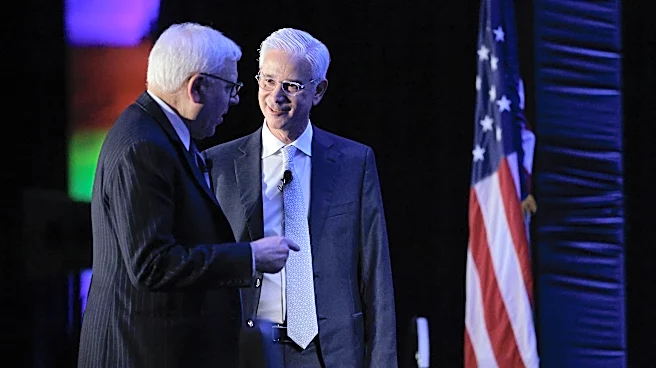
Leaders from North Texas convened at a TCU Center for Real Estate forum, 'Two Cities, One Future: Building the Next Generation of North Texas,' to discuss strategies for sustainable economic growth. With the region's population projected to reach 12.5
million by 2050, the discussion focused on critical investments in infrastructure, development, and talent. Panelists included Andy Mitchell, CEO and co-chair of Bluejack; Chris McLaughlin, CEO of Dallas Fort Worth International Airport; and Chris Wallace, CEO of the North Texas Commission. They emphasized that companies view Dallas and Fort Worth as a single, integrated market, highlighting the importance of regional coordination in areas like transportation, healthcare, and education. Dallas Fort Worth International Airport alone supports approximately 684,000 jobs, underscoring its role as a vital economic asset.
Why It's Important?
The discussions at the TCU forum are highly important for the U.S. economy, particularly for the North Texas region, which is a significant economic engine. Sustaining growth in such a rapidly expanding area requires proactive planning to avoid bottlenecks in infrastructure, housing, and workforce development. The emphasis on regional collaboration is crucial, as fragmented approaches could hinder the area's competitiveness against other major U.S. and international markets. The potential for water supply issues and transportation infrastructure struggling to keep pace with development poses substantial risks, as a single drought could impact a third of Texas's economy. Addressing these challenges through public-private partnerships and coordinated efforts is essential to maintain the region's attractiveness for businesses and residents, ensuring continued job creation and economic prosperity for the U.S.
What's Next?
North Texas leaders are planning significant investments to support future growth. Dallas Fort Worth International Airport is undertaking major capital projects, including the construction of Terminal F and other improvements to accommodate 100 million passengers by 2030, with considerations for an eighth runway. Regional efforts will also focus on improving transportation infrastructure and ensuring adequate water supply to meet the demands of a growing population. Furthermore, there will be a continued push to strengthen the talent pipeline through collaboration between schools, universities, and employers, addressing shortages in skilled trades and preparing the workforce for the increasing role of artificial intelligence and automation. These initiatives aim to ensure that North Texas remains a competitive and sustainable economic hub.
Beyond the Headlines
The forum's focus on sustainable growth in North Texas touches upon deeper societal and environmental implications. The rapid population increase and associated development raise questions about urban sprawl, environmental conservation, and the equitable distribution of resources. The challenge of water supply, for instance, highlights the broader issue of climate change and its impact on regional economies, necessitating innovative solutions and potentially altering lifestyle choices. The discussion on workforce development, particularly the integration of AI and automation, points to a future where continuous learning and adaptability will be paramount for individuals to thrive in a changing job market. This regional dialogue serves as a microcosm for similar challenges faced by other fast-growing metropolitan areas across the U.S., underscoring the need for integrated planning that balances economic ambition with environmental stewardship and social equity.