





What's Happening?
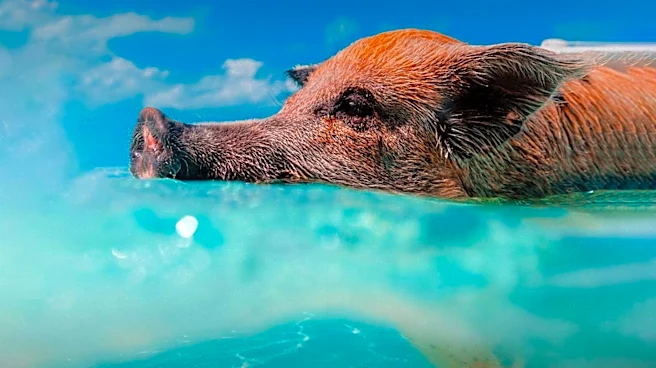
Pig Beach, located in the Exuma Cays in the central Bahamas, is a popular tourist destination where visitors can swim with pigs. According to Trip.com, the main activity involves feeding and interacting with pigs in the shallow waters. The island, Big
Major Cay, has no shops or accommodations, requiring visitors to plan for boats, drinking water, and personal belongings. Day trips typically depart from Nassau and combine swimming with pigs, snorkeling, and other marine activities. Visitors are advised to feed pigs only with apples or designated feed provided on the boat and to avoid bringing human snacks or chasing the animals. The source details travel logistics, including boat options, itinerary suggestions, and essential items for visitors.
Why It's Important?
Pig Beach represents a unique tourism phenomenon that draws visitors to the Bahamas, contributing to the local economy through travel and related services. The interaction with swimming pigs offers a distinctive experience, but it also highlights the importance of responsible tourism and animal welfare. Guidelines for feeding and interacting with the pigs are crucial to ensure the animals' health and safety, as well as the visitors'. The popularity of such attractions can influence travel trends and destination marketing, making it a significant aspect of the regional tourism industry. The absence of any mention of blue pigs or rodenticide exposure in this context clarifies the nature of this attraction.
What's Next?
The continued operation of Pig Beach will likely involve ongoing management of tourist interactions with the pigs to maintain their well-being and the sustainability of the attraction. Tour operators and local authorities will need to enforce feeding regulations and visitor conduct to prevent any negative impacts on the animals or the environment. Marketing efforts will continue to promote the unique experience, potentially attracting more tourists. Future developments might include enhanced infrastructure for visitor comfort or further conservation efforts to protect the natural habitat and its inhabitants.
Beyond the Headlines
The phenomenon of Pig Beach raises broader questions about human-animal interaction in tourism and the ethical considerations involved. While offering a novel experience, it necessitates a balance between visitor enjoyment and the welfare of the animals. The commercialization of such natural attractions often sparks debates about environmental impact, animal behavior modification, and the authenticity of wildlife encounters. This unique destination serves as a case study for how tourism can both benefit and challenge local ecosystems and animal populations, prompting discussions on sustainable practices and responsible travel.