
What's Happening?
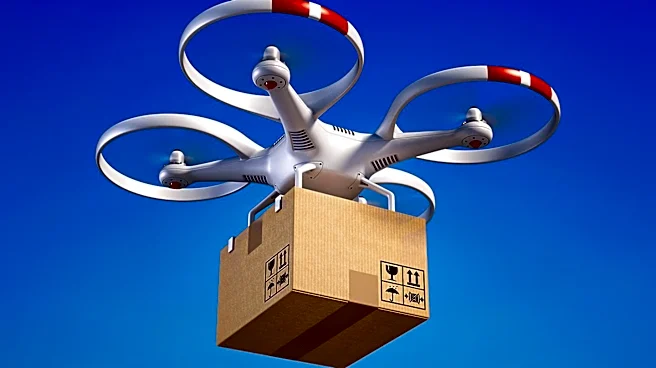
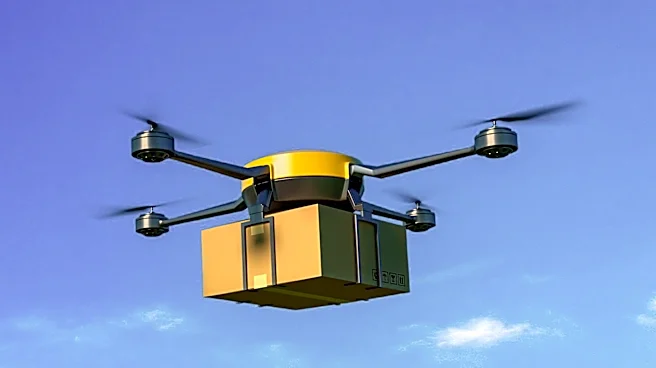
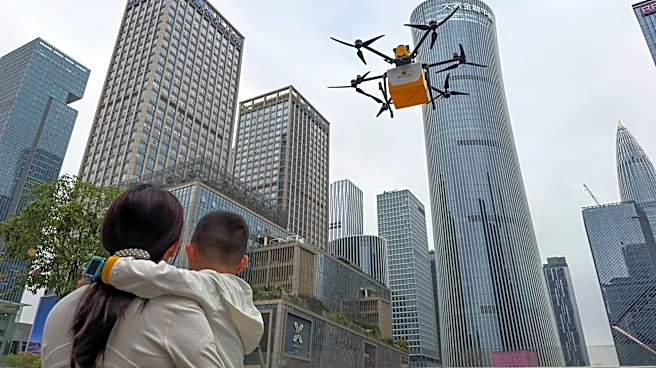
Walmart is partnering with Wing, an Alphabet-owned drone company, to introduce drone delivery services in Los Angeles starting in 2027. This initiative will involve setting up drone hubs at two Walmart locations
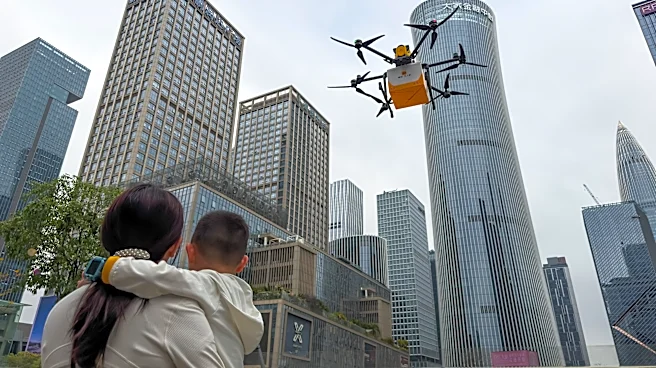
in Southern California. Wing's drones are capable of flying at speeds of up to 60 mph and can deliver lighter items such as groceries, coffee, and hot meals directly to customers' yards. Wing has already successfully completed over a million deliveries in six other U.S. cities, including Dallas, Texas; Charlotte, North Carolina; and Orlando, Florida. The company plans to expand its drone delivery network to over 270 locations nationwide by 2027, aiming for a coast-to-coast presence. This expansion in Los Angeles will integrate with the city's existing autonomous machine landscape, which includes delivery robots and driverless taxis.
Why It's Important?
This partnership signifies a significant advancement in last-mile delivery logistics and consumer convenience. For Walmart, it represents an investment in faster, more efficient delivery methods, potentially increasing customer satisfaction and market share in the competitive retail sector. The introduction of drone delivery could reshape consumer expectations for delivery times, particularly for urgent or smaller-scale purchases. For Wing and the broader drone delivery industry, this expansion with a major retailer like Walmart validates the viability and scalability of drone technology for commercial use. It also highlights the growing trend of automation in urban environments, potentially leading to reduced traffic congestion and lower carbon emissions associated with traditional delivery vehicles. The success of this venture could encourage further investment and adoption of drone delivery across various industries, impacting employment in traditional delivery sectors and creating new jobs in drone operation and maintenance.
What's Next?
Following the 2027 launch in Los Angeles, Wing plans to rapidly expand its drone delivery capabilities to over 270 locations across the United States. This ambitious goal suggests a concerted effort to establish a comprehensive national drone delivery network. The company aims to reach 60 million households with its services by the end of the year, indicating a significant scaling up of operations. The broader drone delivery market is also projected to grow substantially, with an estimated 275,000 delivery drones in operation by 2030, a significant increase from 30,000 in 2024. This expansion will likely involve continued technological advancements in drone capabilities, regulatory adjustments to accommodate widespread drone traffic, and increased competition among drone delivery providers. Stakeholders, including local governments, consumers, and competing delivery services, will closely monitor the rollout and impact of these services.
Beyond the Headlines
The widespread adoption of drone delivery services, as envisioned by Wing and Walmart, raises several deeper implications. Ethically, concerns about privacy due to drones flying over private property and potential noise pollution in residential areas will need to be addressed. Legally, the regulatory framework for drone operations, including airspace management, safety standards, and liability in case of accidents, will require continuous refinement. Culturally, the sight of drones routinely delivering goods could become a normalized aspect of daily life, altering urban soundscapes and visual environments. This shift could also impact local economies by changing the nature of retail employment and potentially creating new opportunities in drone-related fields. The long-term success and public acceptance of drone delivery will depend on how effectively these ethical, legal, and cultural challenges are managed alongside technological advancements.