




What's Happening?
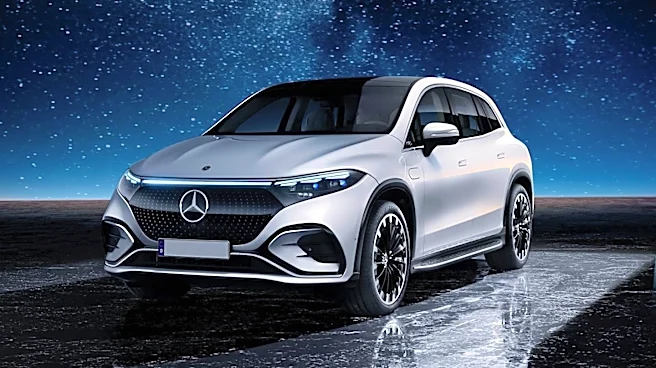
Mercedes-Benz has significantly expanded its Kecskemét plant in Hungary, doubling its size to 440 hectares, making it the largest automotive production site in Hungary and one of the largest in the company's global network. This expansion, funded by a €1
billion investment under the Business Plan 2022–2026, includes new facilities such as a second press shop, paint shop, and battery assembly facility. The plant has commenced production of the electric C-Class, marking its first battery-electric core model. The site now features advanced technologies like a Digital Factory Twin for process simulation and AI-supported quality controls via the MO360 platform. Additionally, the new paint shop reduces energy consumption by 20% and CO₂ emissions by approximately 80%, with solar capacity covering about 25% of the plant's annual energy needs.
Why It's Important?
The expansion of the Kecskemét plant underscores Mercedes-Benz's commitment to flexible, local production as a strategy to navigate market volatility. By integrating battery-electric and combustion engine vehicle production on a single line, the plant enhances operational efficiency and reduces supply chain dependencies. This move aligns with the global automotive industry's shift towards sustainable and electric mobility solutions. The investment also highlights Hungary's growing significance in the automotive sector, potentially boosting local employment and economic growth. For Mercedes-Benz, this expansion strengthens its competitive position in the electric vehicle market, supporting its broader sustainability goals and enhancing its production capabilities in Europe.
What's Next?
The Kecskemét plant will continue to play a pivotal role in Mercedes-Benz's European production network, linking with the Rastatt plant for shared production capabilities. The plant is set to produce the electric GLC flexibly alongside the Bremen plant, while a more compact G-Class variant will be exclusively manufactured in Hungary. These developments are expected to further integrate the plant into Mercedes-Benz's global supply chain, enhancing its role in the company's transition to electric mobility. Stakeholders, including local government and industry partners, are likely to monitor the plant's impact on regional economic development and its contribution to sustainable manufacturing practices.