


What's Happening?
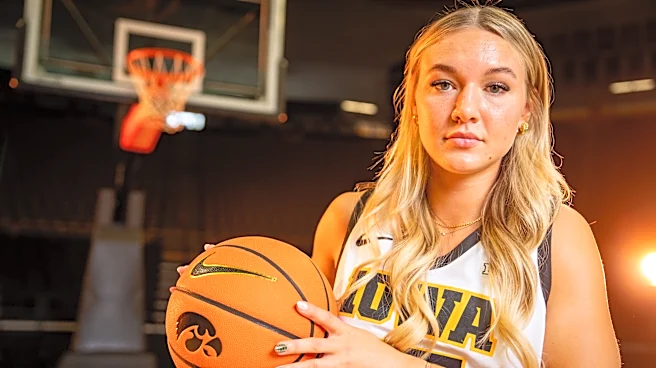
Callie Levin, a third-year guard, made an emotional return to Carver-Hawkeye Arena as a player for the University of Northern Iowa (UNI) against her former team, the Iowa Hawkeyes. Levin transferred from Iowa to UNI last spring after two seasons with
the Hawkeyes where she saw limited playing time. During her return game, she was introduced in the starting lineup for the first time on the Hawkeyes' home court and scored her first 3-pointers there as a UNI player. Levin expressed gratitude for her new start at UNI, crediting Coach Tanya Warren for instilling confidence in her after a period of losing it. Despite the emotional nature of the game, Levin maintained a competitive spirit against her former teammates, with whom she remains friends.
Why It's Important?
Levin's story highlights the increasing prevalence and impact of the transfer portal in college athletics, particularly in women's basketball. Her experience reflects the challenges many athletes face in finding the right fit for playing time and development, even at their dream schools. The warm reception she received from Iowa fans and coach Jan Jensen underscores the evolving landscape of player movement, where transfers are often viewed with understanding rather than animosity. This narrative also emphasizes the importance of coaching relationships and team culture in an athlete's success and well-being. For UNI, Levin's transfer represents a significant acquisition, bringing in a high-character player with Division I experience who immediately became a team captain, demonstrating the immediate impact transfers can have on new programs.
What's Next?
Callie Levin will continue her season with the University of Northern Iowa, aiming to achieve her personal goal of being named newcomer of the year and team goals of winning a conference championship and reaching the NCAA tournament. Her performance and leadership at UNI will be closely watched as she seeks to maximize her playing career. The ongoing success of players like Levin, who utilize the transfer portal to find better opportunities, will likely continue to influence how high school recruits and current college athletes view their collegiate paths. For both Iowa and UNI, this game serves as a reminder of the dynamic nature of college rosters and the personal journeys of student-athletes within the competitive landscape of NCAA basketball.
Beyond the Headlines
Levin's journey touches upon deeper themes of resilience, self-discovery, and the mental health aspects of collegiate sports. Her candid admission of losing confidence and the subsequent rebuilding of it at UNI speaks to the psychological pressures athletes face. The narrative also subtly critiques the 'dream school' phenomenon, suggesting that sometimes the ideal fit for an athlete's development may not be their childhood aspiration. The continued camaraderie between Levin and her former Iowa teammates, despite their on-court rivalry, illustrates the strong bonds formed in sports and the ability of athletes to navigate competitive transitions with grace. This story serves as a microcosm of the broader discussion around player empowerment and the evolving relationship between athletes, coaches, and institutions in modern college sports.