




What's Happening?
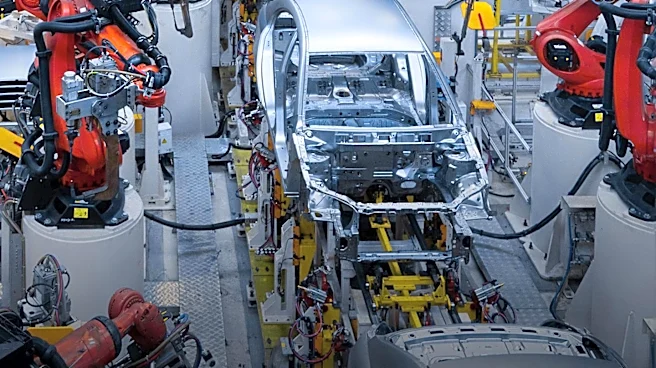
Chinese automakers are significantly increasing their overseas production capacity, moving beyond a pure export model to establish local manufacturing facilities. According to the Gasgoo Automotive Research Institute database, planned overseas production capacity for
Chinese automakers is projected to reach approximately 6.85 million units by 2026, nearly doubling from 3.44 million units in 2023. This expansion is driven by intense domestic competition, the changing economics of international trade, and the need to embed more deeply into local economies. While China's automotive industry has historically relied on efficient domestic manufacturing for exports, the shift towards overseas factories signifies a deeper form of globalization. Companies like BYD, Changan, and Great Wall Motor are establishing or acquiring plants in regions such as ASEAN, Russia, South America, and Europe, with varying strategies from greenfield developments to brownfield acquisitions and partnerships. This move aims to mitigate tariffs, reduce logistics costs, and align with local industrial policies, transforming how Chinese automakers engage with global markets.
Why It's Important?
This strategic shift by Chinese automakers has significant implications for the global automotive industry, including the U.S. market. By establishing local production, Chinese companies can potentially circumvent trade barriers and tariffs, making their vehicles more competitive in international markets. This could intensify competition for established U.S. and European automakers, particularly in emerging markets where Chinese brands are rapidly gaining traction. The move also signifies a maturation of China's automotive industry, as it transitions from being a manufacturing hub for exports to a global player with localized production, supply chains, and R&D capabilities. This could lead to increased foreign direct investment in various countries, job creation in host nations, and a more diversified global automotive supply chain. For U.S. consumers, this could eventually mean a wider array of vehicle options and potentially more competitive pricing, depending on how these global production shifts influence market dynamics and import policies.
What's Next?
The trend of Chinese automakers expanding overseas manufacturing is expected to continue, with a focus on deepening localization and integrating into local industrial ecosystems. Companies will likely continue to explore diverse entry strategies, including greenfield investments, acquisitions, and strategic partnerships, tailored to specific market conditions and their stage of globalization. This will involve not only building assembly plants but also transferring supply chain capabilities, R&D, and talent to overseas locations. The next phase will test the quality of these overseas operations and the extent of their localization, moving beyond simple KD (knock-down) production to more fully integrated manufacturing. As Chinese automakers adapt their powertrain strategies to diverse global energy structures and regulatory environments, their presence in international markets, including those with direct or indirect ties to the U.S., is set to grow, potentially influencing future trade agreements and competitive landscapes.
Beyond the Headlines
The expansion of Chinese automotive manufacturing overseas represents a profound shift in global industrial dynamics, moving beyond mere trade to the establishment of shared industrial interests. This development challenges traditional notions of global supply chains and manufacturing dominance, potentially leading to a more multipolar automotive industry. The ethical and cultural implications include the integration of diverse labor forces, the transfer of technological know-how, and the adaptation of corporate cultures to local contexts. Long-term shifts could include a rebalancing of global economic power, with China's automotive sector playing a more central role in shaping international manufacturing standards and practices. This also raises questions about intellectual property rights, environmental regulations, and labor standards in host countries, as Chinese companies navigate different legal and social frameworks while expanding their global footprint.