




What's Happening?
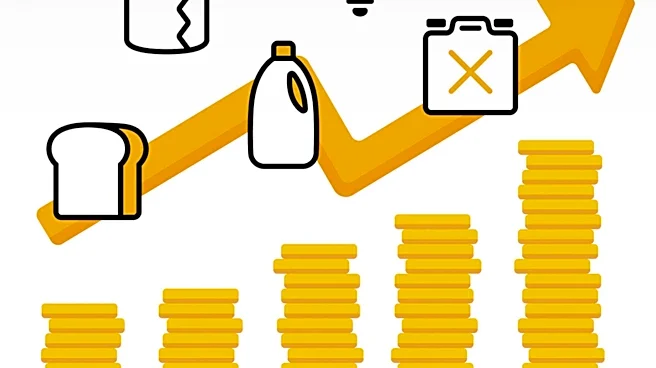
Tariffs and rising diesel costs have contributed to a 10% to 15% increase in artificial Christmas tree prices over the past two holiday seasons. Despite these increases, prices for artificial trees are currently holding steady. Consumers are increasingly
focused on finding value and convenience in their holiday decorations, with 45% planning to spend less this year and 30% not planning to buy new decorations at all, according to the National Tree Company. Retailers like Walmart are offering artificial trees for as little as $50, with popular options including snow-covered flocked trees and newer models featuring rotating bases and multi-color lights. Chris Butler, CEO of National Tree Company, notes that shoppers are prioritizing functionality and ease of setup, with some artificial trees designed to pop into shape quickly.
Why It's Important?
The rising cost of Christmas trees and holiday décor, driven by tariffs and diesel expenses, directly impacts American consumers' holiday budgets. This trend reflects broader economic pressures, including global trade policies and energy costs, affecting the pricing of imported goods. The shift in consumer behavior towards seeking value and convenience, and a willingness to spend less on new decorations, could influence retail strategies for holiday sales. Retailers that can offer affordable options and innovative products that simplify the decorating process, such as easy-to-assemble artificial trees, may gain a competitive advantage. This situation also highlights the ongoing debate about the impact of tariffs on consumer goods and the ripple effect of transportation costs on retail prices, affecting household spending during a key economic season.
What's Next?
As the holiday shopping season progresses, consumers will likely continue to compare prices online and seek out sales, particularly during Black Friday events, to mitigate the impact of higher prices. Retailers will need to adapt their marketing and inventory strategies to cater to the demand for value and convenience. The trend of consumers opting for smaller secondary trees or coordinated décor collections instead of replacing their main tree suggests a shift in decorating habits that could persist beyond this holiday season. The long-term outlook for Christmas tree prices will depend on the stability of global trade policies and energy costs. If tariffs and diesel prices remain high, consumers may increasingly turn to artificial trees as a more cost-effective long-term investment, or continue to reduce their overall spending on holiday decorations.