


What's Happening?
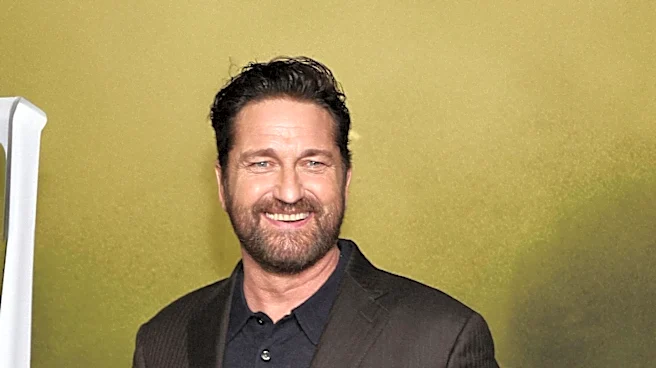
The action film "Geostorm," starring Gerard Butler, experienced substantial production chaos and creative compromises, leading to a final product that many critics found uneven. Originally conceived by Dean Devlin as a large-scale weather spectacle, the film's
narrative became muddled with an overladen conspiracy plot. After initial test screenings received poor feedback, producer Jerry Bruckheimer was brought in, leading to extensive reshoots in December 2016, more than two years after principal photography. These reshoots involved removing entire characters, recasting roles, and adding new sections, causing significant delays and multiple release date postponements. The film centers on a satellite engineer, Jake (Butler), sent into space to prevent a global storm caused by malfunctioning weather-controlling satellites, while on Earth, a plot to assassinate the US President unfolds.
Why It's Important?
The production struggles of "Geostorm" serve as a cautionary tale in Hollywood regarding creative control, studio interference, and the impact of extensive reshoots on a film's coherence and quality. Such chaotic productions can lead to significant financial losses for studios due to increased budgets from reshoots and potential underperformance at the box office. For actors like Gerard Butler, involvement in such projects can affect their professional reputation, even if the issues are beyond their control. This case highlights the challenges of maintaining a singular creative vision when multiple stakeholders and creative teams become involved, often resulting in a disjointed narrative that fails to resonate with audiences. It also underscores the pressure on studios to salvage troubled productions, sometimes at the expense of artistic integrity.
What's Next?
The experience of "Geostorm" may influence future production strategies in Hollywood, potentially leading studios to exercise more caution with extensive post-production overhauls. Filmmakers might push for greater creative autonomy to avoid similar outcomes, while producers may seek to establish clearer creative guidelines from the outset. For Gerard Butler, his career continues with other projects, but the film remains a notable example of a production fraught with difficulties. The industry may also continue to debate the effectiveness and financial viability of bringing in new creative teams for significant reshoots, especially when the original vision is drastically altered. This could lead to more upfront investment in script development and pre-production to mitigate risks later in the process.
Beyond the Headlines
Beyond the immediate production issues, "Geostorm" reflects a broader trend in Hollywood where commercial viability often trumps artistic cohesion. The film's attempt to blend a disaster movie with a political thriller, seemingly to appeal to a wider audience, ultimately diluted both genres. This approach raises questions about the creative integrity of blockbuster filmmaking and the pressure to create universally appealing, yet often generic, content. The extensive reshoots also highlight the financial risks studios are willing to take to try and fix perceived flaws, sometimes resulting in a product that satisfies no one. This case can be viewed as a microcosm of the challenges faced by large-scale productions in balancing creative ambition with commercial expectations, often leading to compromises that undermine the original vision and audience experience.