




What's Happening?
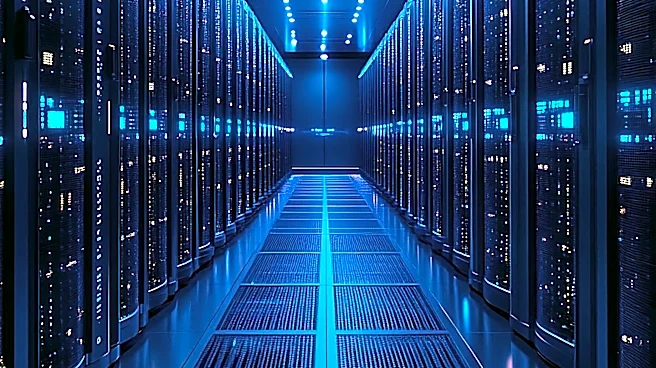
SpaceX has emerged as Nvidia's largest customer, a position it has held since the second half of 2026, according to Nomura. The company, founded by Elon Musk, is projected to significantly increase its compute needs, scaling from approximately 3 GW at the end
of 2026 to over 13 GW by the end of 2027. This substantial increase has led Nomura to raise its 2027 forecast for Nvidia NVL72 racks to 75,000, up from 66,000. SpaceX is anticipated to account for 20% to 40% of all Nvidia racks in 2027, making it the biggest buyer of chips that Nvidia sells to the entire AI industry. This development raises questions about SpaceX's evolving identity, moving beyond its traditional role as a rocket company into a major AI compute entity.
Why It's Important?
This shift highlights a significant trend in the technology sector, where companies traditionally known for one area are rapidly expanding into others, particularly artificial intelligence. For Nvidia, securing SpaceX as its largest customer underscores its dominant position in the AI chip market and signals robust demand for its high-performance computing solutions. This partnership could further solidify Nvidia's market leadership and influence future developments in AI infrastructure. For SpaceX, this move suggests a strategic pivot or significant expansion into AI compute capabilities, which could support its various ambitious projects, including satellite internet and space exploration, by leveraging advanced AI processing. The substantial investment in AI compute infrastructure by a company like SpaceX could also drive innovation and competition within the AI industry, potentially leading to new applications and advancements.
What's Next?
The increased demand from SpaceX is expected to drive Nvidia's production and potentially influence its product development roadmap, focusing on high-capacity AI racks like the NVL72. Industry observers will be watching to see how this partnership impacts the broader AI chip market and the supply chain for advanced computing hardware. SpaceX's continued scaling of its AI compute capabilities could lead to further integration of AI into its core operations and potentially new ventures. This could also prompt other major technology companies to re-evaluate their AI infrastructure strategies and investments. The market will likely monitor whether SpaceX's substantial AI investments translate into tangible advancements in its existing projects or lead to the development of entirely new AI-driven services or products.
Beyond the Headlines
The transformation of SpaceX from primarily a rocket company to a significant AI compute player has broader implications for the definition of technology companies in the 21st century. It suggests that the lines between different tech sectors are blurring, with AI becoming a foundational technology across diverse industries. This development could also spark discussions about the concentration of AI compute power and its potential impact on innovation, competition, and even national security. The sheer scale of SpaceX's planned compute capacity raises questions about the energy consumption of such operations and their environmental footprint. Furthermore, it highlights the strategic importance of talent in AI, as companies like SpaceX accumulate skilled personnel to drive these advanced initiatives, potentially creating a talent arms race in the tech industry.