




What's Happening?
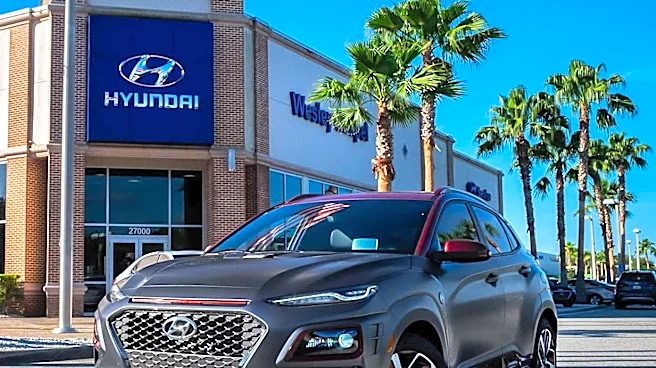
A Clinton Township, Michigan resident, Stanley Kpenkann, was charged $418 for a single electric vehicle (EV) charging session at Elder Hyundai's Macomb Township store. Kpenkann, who was driving a rented Chevy Bolt EV, located the charger through the EVgo
app, which listed it as publicly available. He only discovered the exorbitant charge after completing his approximately 40-minute charging session. Upon contacting EVgo, Kpenkann learned that the charge was not an error; Elder Hyundai was reportedly charging customers $5 per kilowatt-hour (kWh) in addition to $5 for every minute connected. This incident highlights a broader issue within the EV charging industry, particularly concerning car dealerships that list chargers as public but implement restrictive access or excessive pricing. Another similar instance involved a Hyundai dealer in Union, NJ, charging $15 per kWh.
Why It's Important?
This incident is significant because it exposes a lack of transparency and potential predatory pricing practices within the burgeoning EV charging infrastructure, which could deter new EV adopters. Unclear pricing structures and unexpected high costs undermine consumer confidence in electric vehicles and the charging network. For the EV industry, such experiences can negatively impact the perception of EVs as a viable and cost-effective transportation option. The current lack of regulation in many states, unlike gas stations that are required to display fuel prices clearly, allows some charge point operators (CPOs) to exploit customers. This situation could lead to calls for increased regulation to ensure transparent pricing and fair access to publicly listed charging stations, protecting consumers and fostering the growth of EV adoption.
What's Next?
The incident is likely to fuel discussions about the need for greater regulation in the EV charging sector. Consumer advocacy groups and EV owner communities may push for legislation that mandates clear and upfront pricing displays for all public charging stations, similar to gas stations. State and federal authorities might consider implementing rules to cap energy markups and ensure transparent pricing. There could also be increased scrutiny on dealerships and other entities that receive public funds or incentives for installing charging infrastructure, with calls for aggressive clawback mechanisms if they fail to meet standards for public access and fair pricing. EV charging app providers may also face pressure to improve the accuracy and transparency of pricing information displayed to users.
Beyond the Headlines
Beyond the immediate financial impact on individual consumers, these pricing discrepancies touch upon broader ethical and economic implications for the EV transition. The lack of standardized pricing and accessibility can create a two-tiered system where early adopters or those with home charging capabilities benefit, while others, particularly those reliant on public charging, face unpredictable and potentially prohibitive costs. This could exacerbate economic inequalities and slow down the equitable adoption of EVs. Furthermore, it raises questions about the role of public subsidies in developing charging infrastructure; if public funds are used, there's an expectation that the resulting services should genuinely benefit the public at fair rates. The long-term success of the EV market depends not just on vehicle availability but also on a reliable, accessible, and transparent charging ecosystem.