





What's Happening?
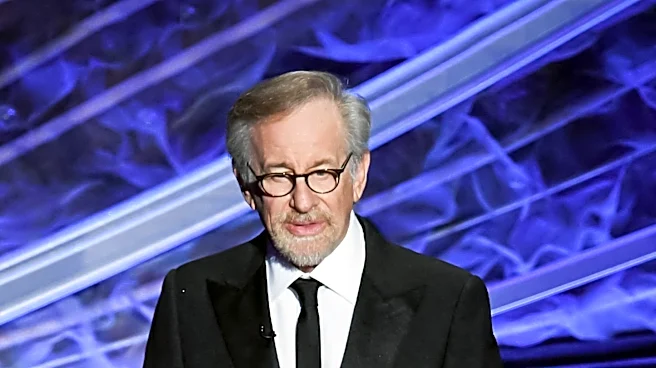
Director Steven Spielberg has consistently voiced his dissatisfaction with his 1991 film 'Hook,' a Peter Pan-inspired adventure starring Robin Williams, Dustin Hoffman, and Julia Roberts. Despite the movie's commercial success, grossing over $300 million
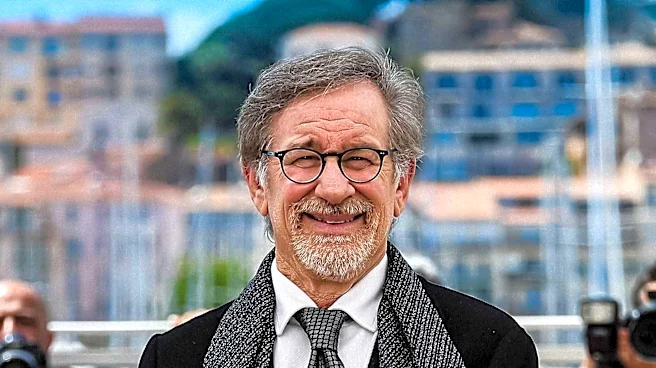
worldwide against a $70 million budget, Spielberg has maintained his critical stance. In a 2013 interview on 'Kermode and Mayo's Film Review,' he stated, 'I still don’t like this movie. I hope one day I’ll re-watch it and maybe appreciate some parts of it.' He reiterated this sentiment in 2016 at the Cannes Film Festival, distinguishing 'Hook' from his other works and expressing hope that his film 'The BFG' would be 'much better than Hook.' Spielberg's primary concern stemmed from a lack of confidence in the screenplay's core, feeling secure only in the first act and the epilogue. He admitted to masking his insecurity during production by focusing on increasingly elaborate and colorful sets, which he now views as a reflection of his artistic doubts. This perspective contrasts sharply with the film's enduring popularity among audiences.
Why It's Important?
This revelation from a director of Steven Spielberg's stature highlights the complex relationship between artistic vision, critical reception, and audience appreciation in the film industry. It underscores that a film's commercial success and cultural impact do not always align with its creator's personal satisfaction. For aspiring filmmakers and industry professionals, Spielberg's candidness offers a valuable lesson: even highly acclaimed directors can struggle with their projects and harbor regrets, demonstrating that creative fulfillment is subjective and not solely tied to box office numbers or public adoration. For film critics and scholars, it provides a unique insight into the production challenges and artistic compromises that can occur even on major Hollywood productions. The disconnect between Spielberg's view and the film's cult status also illustrates how audiences can find value and nostalgia in works that their creators may deem flawed, emphasizing the diverse ways art is perceived and consumed.
What's Next?
While Spielberg's stance on 'Hook' is well-established, his comments continue to fuel discussions among film enthusiasts and critics about the film's legacy. There is no indication that Spielberg plans to revisit or re-edit 'Hook,' nor is there any scheduled decision regarding its future beyond its current availability on streaming platforms like Netflix and Sony Pictures Core. The film will likely continue to be viewed through two lenses: as a beloved childhood classic for many viewers and as a source of artistic dissatisfaction for its director. Future retrospectives or interviews with Spielberg might offer further nuances to his perspective, but a fundamental shift in his opinion seems unlikely given his consistent remarks over the years. The ongoing availability of 'Hook' on streaming services ensures its continued accessibility to new generations, perpetuating the divergence between creator and audience sentiment.
Beyond the Headlines
The enduring debate surrounding 'Hook' delves into deeper questions about artistic ownership and audience interpretation. Spielberg's struggle with the film, despite its widespread appeal, highlights the subjective nature of creative success. It raises ethical considerations about whether a creator's personal feelings should influence the public's perception of a work, especially when that work has resonated deeply with a generation. Culturally, 'Hook' has become a touchstone for many who grew up in the 1990s, embodying themes of lost innocence, the power of imagination, and the importance of family. This cultural resonance often transcends the technical or narrative criticisms a director might have. The film's journey from a critically challenging production for Spielberg to a cherished classic for its audience exemplifies how art can take on a life of its own, evolving in meaning and significance beyond its initial creation. This phenomenon underscores the dynamic interplay between creators, their creations, and the diverse audiences who engage with them.