



What's Happening?
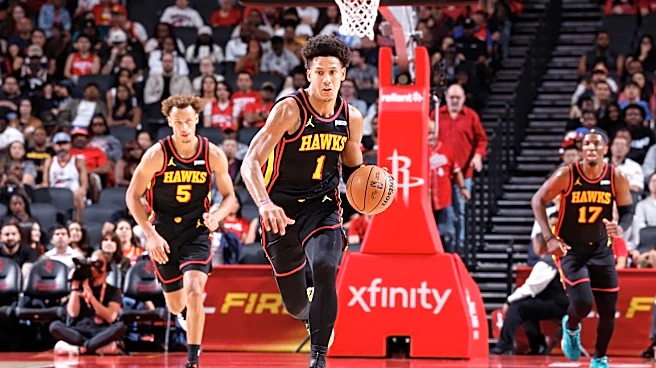
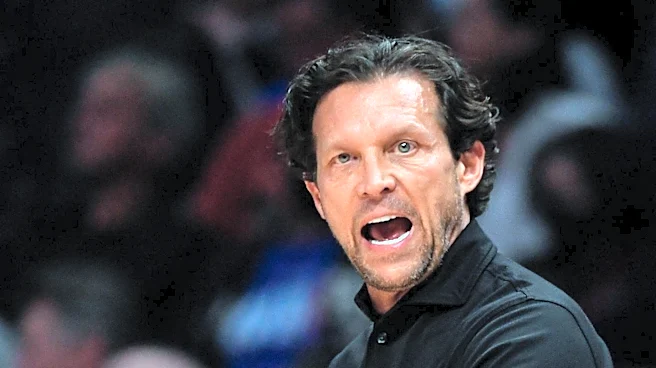
Quin Snyder, head coach of the Atlanta Hawks, is playing a fundamental role in shaping the team's strategic preparation and individual player development. This influence is highlighted by the career trajectory of Sergi Oliva, a Catalan basketball executive
and coach, who left a stable position in Philadelphia in 2020 to join Snyder in Utah, motivated by Snyder's reputation as a top coach. Oliva has now reunited with Snyder at the Atlanta Hawks, taking on a flexible advisory role focused on strategic preparation and player development. This new position allows Oliva to contribute to the team's long-term vision without the demanding day-to-day schedule of a traditional coaching role, which includes extensive travel, bench duties, and training sessions. Oliva's journey to the NBA began unexpectedly at age 30, combining his scientific background with his passion for basketball, eventually leading him to work with Snyder, whom he considers 'brilliant'.
Why It's Important?
The collaboration between Quin Snyder and Sergi Oliva underscores a growing trend in professional sports towards specialized strategic roles and data-driven player development. Snyder's ability to attract and retain talent like Oliva, who brings a unique blend of scientific and basketball expertise, highlights the value placed on innovative approaches within the NBA. This partnership could provide the Atlanta Hawks with a competitive edge by refining their strategic planning and optimizing individual player performance. For the broader NBA, it signifies an evolution in coaching staff structures, moving beyond traditional roles to incorporate advisors who can offer fresh perspectives and long-term strategic insights. This model could influence how other teams build their support staff, emphasizing flexibility and specialized knowledge to navigate the league's intense and evolving landscape.
What's Next?
The Atlanta Hawks will likely continue to integrate Oliva's strategic insights into their team operations, focusing on long-term player development and game strategy. This advisory role, designed for flexibility, suggests a sustained collaboration that could evolve as the team's needs change. Other NBA franchises might observe the effectiveness of this specialized advisory model, potentially leading to similar appointments across the league. The emphasis on strategic preparation and individual growth, as championed by Snyder and Oliva, could become a more prominent aspect of team building in the coming seasons, influencing how teams approach talent acquisition and development. The success of this approach could also impact how coaches and executives are valued, with a greater premium placed on those who can foster innovative strategic partnerships.
Beyond the Headlines
The dynamic between Snyder and Oliva reflects a deeper shift in professional sports, where traditional coaching roles are being augmented by specialized experts who bring diverse skill sets. Oliva's background, combining science and basketball, exemplifies the interdisciplinary approach increasingly valued in high-performance environments. This trend challenges conventional notions of coaching and team management, suggesting that success in modern sports requires a blend of on-court experience, analytical prowess, and strategic foresight. The flexibility offered to Oliva also points to a recognition of the demanding nature of professional sports careers and the need to adapt roles to retain valuable talent. This could lead to more personalized career paths within sports organizations, allowing experts to contribute effectively while maintaining a sustainable work-life balance.