





What's Happening?
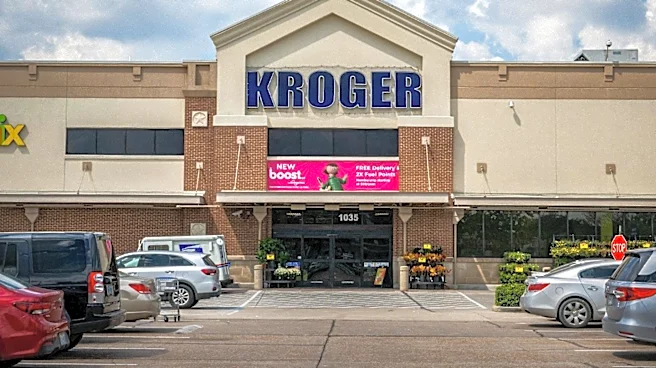
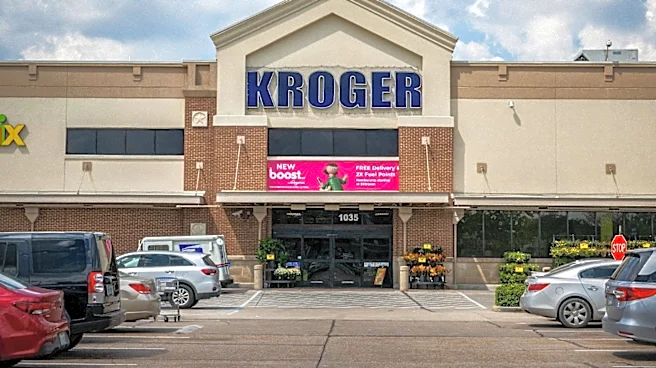
Kroger's stock has seen a significant 76.9% return over the past five years, prompting investors to evaluate if its current share price is justified by its projected cash flows. A Discounted Cash Flow (DCF) model suggests that Kroger's intrinsic value
is substantially higher than its current share price of $68.44, indicating that the market may not be fully reflecting its expected cash generation. The supermarket group generated approximately $2.6 billion in free cash flow over the last twelve months, with projections assuming continued growth. However, recent findings regarding lead levels in baby food products sold through Harris Teeter and Kroger branded snacks have introduced a new factor that could influence investor perception of future compliance costs and brand strength, potentially leading to a discount in share prices despite favorable cash flow profiles.
Why It's Important?
The discrepancy between Kroger's intrinsic value, as suggested by the DCF model, and its current market price highlights a potential undervaluation, which could present an opportunity for investors. However, the scrutiny over lead levels in baby food products is a critical development. This issue could lead to increased compliance costs for Kroger, impact its brand reputation, and potentially affect consumer trust, thereby influencing future sales and cash flow projections. For the broader U.S. food retail industry, such concerns can trigger stricter regulatory oversight and increased consumer demand for transparency and safety in food products, particularly those for infants. This situation underscores the importance of corporate responsibility and product safety in maintaining market confidence and long-term financial health.
What's Next?
Investors will likely monitor Kroger's response to the concerns regarding lead levels in baby food products, including any measures taken to address product safety and compliance. The company's ability to mitigate potential brand damage and manage future compliance costs will be crucial in determining whether its stock price aligns more closely with its projected intrinsic value. Furthermore, the broader market will observe if these findings lead to increased regulatory scrutiny or new industry standards for food safety, particularly for baby food. Kroger's performance in its upcoming earnings reports and any updates on its cash flow generation will also be key indicators for investors assessing the company's financial health and future prospects.
Beyond the Headlines
The issue of lead levels in baby food extends beyond Kroger's immediate financial performance, touching upon significant public health and ethical considerations. It raises questions about the adequacy of current food safety regulations and testing protocols for infant products across the U.S. food industry. This situation could catalyze a broader societal discussion on corporate accountability in ensuring the safety of vulnerable populations, such as infants, and the role of regulatory bodies in enforcing stringent standards. The long-term implications could include a shift in consumer purchasing habits towards brands perceived as safer, increased demand for organic and natural food products, and potentially a re-evaluation of supply chain practices to minimize contaminants. This event highlights the delicate balance between business profitability and public welfare.