




What's Happening?
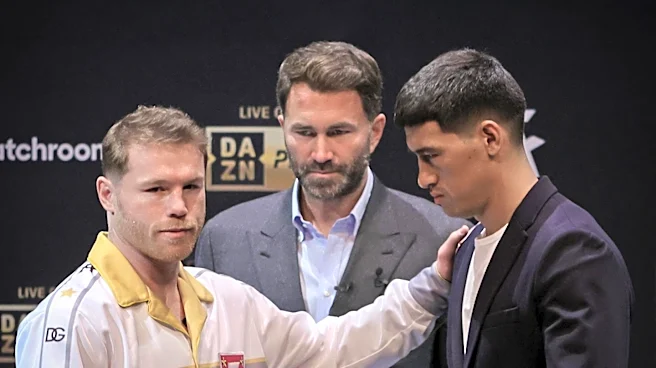
Dmitry Bivol is highlighted as a prime modern example of the Soviet boxing style, characterized by precise footwork, a disciplined guard, and well-timed straight punches. This approach emphasizes controlling opponents without constant close-range engagements.
The Soviet boxing system prioritizes mastering long-range fundamentals, enabling a boxer to manage distance, maintain balance, and dictate the rhythm of a fight using jabs, straight punches, footwork, and angles. Bivol's technique showcases a relaxed, fluid punching style that transfers energy sequentially through the body, rather than relying on rigid, explosive movements. This wave-like action, starting from the feet and legs and moving through the hips and torso to the shoulder, arm, and fist, allows for energy efficiency, high punch output, speed, fluidity, and better rhythm. This contrasts with more unified, explosive punching styles, like that of Mike Tyson, which focus on compact, powerful movements for close-range effectiveness. The article underscores that elite boxers often combine elements of both approaches depending on the situation.
Why It's Important?
The emphasis on the Soviet boxing style, as exemplified by Dmitry Bivol, offers a significant perspective on boxing technique and training methodologies within the U.S. and globally. For aspiring boxers and coaches, understanding Bivol's approach highlights the importance of technical precision, distance management, and energy efficiency over brute force. This can influence training programs, shifting focus towards fundamental skills, relaxation, and coordinated body movement. The distinction between wave-like and unified punching mechanics provides a framework for analyzing different fighting styles, potentially leading to more adaptive and versatile boxers. For the boxing industry, Bivol's success validates a less common, yet highly effective, style, which could inspire a new generation of fighters to explore diverse technical foundations. This also impacts how fights are strategized and analyzed, as Bivol's method of controlling the ring and minimizing unnecessary exchanges presents a challenge to more aggressive, power-focused opponents, influencing match-making and tactical preparations.
What's Next?
The continued success of fighters like Dmitry Bivol is likely to further popularize the principles of Soviet boxing within the U.S. boxing community. This could lead to an increased adoption of these training methodologies in boxing gyms and academies, with a greater focus on footwork, distance control, and fluid punching mechanics. Coaches may integrate more drills designed to enhance sequential energy transfer and relaxation, moving away from an exclusive emphasis on raw power. As Bivol continues to compete at the highest levels, his fights will serve as practical demonstrations of the effectiveness of this style, potentially influencing how young boxers are developed and how professional fights are approached. The boxing world may see a rise in technically proficient fighters who prioritize strategic control over aggressive exchanges, leading to a more diverse and nuanced competitive landscape. This shift could also impact how boxing is viewed by fans, appreciating the intricate technical aspects alongside the raw power.
Beyond the Headlines
Beyond the immediate impact on boxing techniques, the recognition of Dmitry Bivol's Soviet boxing style touches upon broader cultural and historical influences in sports. It highlights how different national or regional training philosophies can produce distinct and highly effective athletic approaches. This phenomenon extends beyond boxing, demonstrating that there isn't a single 'best' way to achieve peak performance, but rather diverse paths shaped by unique pedagogical traditions. The emphasis on relaxation and efficiency in the Soviet style also offers a valuable lesson in human performance, suggesting that sometimes less overt muscular effort, when combined with precise coordination, can yield superior results. This principle has implications for other physical disciplines and even for understanding efficiency in non-athletic tasks. Furthermore, Bivol's success challenges the often-dominant narrative of power and aggression in combat sports, promoting an appreciation for strategic intelligence and technical mastery, which can elevate the intellectual aspect of boxing for both practitioners and spectators.