
What's Happening?
Jonathan Anderson, a prominent fashion designer, is advocating for a return to creativity and authenticity within the fashion industry. He believes in subtly influencing the system rather than being overtly
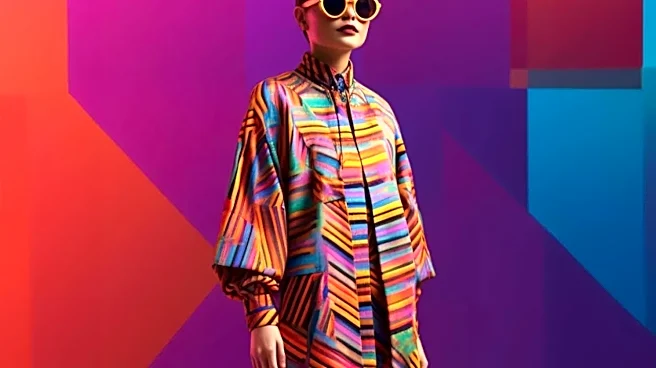
loud. Anderson's recent collections, including his menswear show for JW Anderson, draw inspiration from the 'blurred' and 'confused' nature of recent years, aiming to reinterpret classic menswear with an ambiguous twist. He highlights specific designs such as the Twisted embroidered straight jeans and the Grape Stripe Vacation Shirt as examples of his unique approach. Anderson also reflects on the influence of powerful women in fashion, like Donatella Versace and Manuela Pavesi, who he sees as examples of uncompromising authenticity. He expresses a desire to re-inject creativity into an industry he feels has become overly focused on marketing and single-product consumption.
Why It's Important?
Anderson's call for greater creativity and authenticity is significant for the U.S. fashion industry, which often mirrors global trends. His perspective challenges the prevailing commercialization and rapid consumption cycles that dominate the market. By emphasizing unique design and a less 'loud' approach, Anderson could influence a shift towards more thoughtful and enduring fashion, potentially impacting consumer behavior and design philosophies. This could lead to a greater appreciation for craftsmanship and originality over fleeting trends, benefiting designers who prioritize artistic expression. Conversely, brands heavily reliant on fast fashion and aggressive marketing might face pressure to adapt their strategies. His focus on reinterpreting classic menswear with ambiguity also speaks to evolving gender norms and fluid identities, which could resonate with a diverse U.S. consumer base and encourage more inclusive design.
What's Next?
Anderson plans to continue showcasing his collections, with a return to Milan for a physical show in June, underscoring the importance of in-person events for industry connection and celebration. His ongoing work will likely further explore themes of ambiguity and the re-evaluation of classic styles. The fashion industry may see other designers and brands adopting similar philosophies, moving away from purely commercial drivers towards more artistic and authentic expressions. This could manifest in new design collaborations, a greater emphasis on sustainable practices, and a renewed focus on the narrative behind collections. Consumers might also become more discerning, seeking out brands that align with values of originality and integrity, potentially leading to a more diverse and less homogenous fashion landscape in the U.S.
Beyond the Headlines
Beyond the immediate trends, Anderson's philosophy touches upon deeper cultural and ethical considerations within the fashion world. His critique of the industry's marketing-driven nature and focus on single products highlights concerns about overconsumption and the environmental impact of fast fashion. By advocating for authenticity and creativity, he implicitly promotes a more sustainable and meaningful engagement with clothing. The idea of 'breaking apart' the body and embracing ambiguity in menswear also challenges traditional gender constructs, reflecting broader societal shifts towards fluidity and self-expression. This could lead to a more inclusive and less rigid understanding of fashion, where clothing serves as a medium for personal identity rather than conforming to prescribed norms. His admiration for figures like John Galliano and Miuccia Prada, who have consistently pushed boundaries, suggests a long-term vision for fashion as an art form that provokes thought and challenges the status quo.