







What's Happening?
Man Group plc, an institutional investor, has acquired a new stake of 36,988 shares in Burlington Stores, Inc. (NYSE:BURL) during the second quarter. This acquisition is valued at approximately $11,718,000, making Man Group plc the owner of about 0.06%
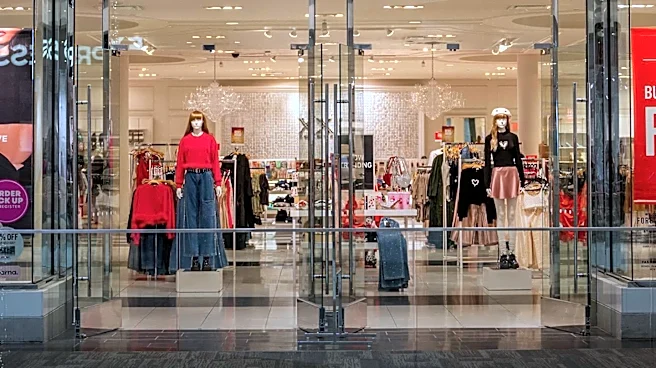
of Burlington Stores' stock. This move is part of broader institutional investment activity in Burlington Stores, with other hedge funds also adjusting their positions. For instance, MIRAE ASSET GLOBAL ETFS HOLDINGS Ltd. increased its stake by 14.4%, Jones Financial Companies Lllp grew its position by 1,604.7%, and AXA S.A. increased its holdings by 1,033.2%. These transactions indicate a notable interest from institutional investors in the off-price retailer. Burlington Stores, known for selling apparel and home goods at discounted prices, recently reported strong second-quarter adjusted EPS of $2.96, surpassing analyst consensus, and an 11% year-over-year revenue increase to approximately $3.0 billion. However, the company's revenue fell slightly short of the $3.03 billion consensus, and comparable-store sales growth slowed to 2%.
Why It's Important?
The substantial investment by Man Group plc, alongside increased holdings by other institutional investors, signals a vote of confidence in Burlington Stores' long-term potential despite some recent mixed financial signals. Institutional backing can provide stability and liquidity to a company's stock, potentially influencing its market valuation and investor perception. For Burlington Stores, this influx of institutional capital could support its aggressive expansion plans, which include opening 20 new stores across 12 states in September. Such expansion is crucial for increasing long-term sales and market share in the competitive retail sector. The company's strategy to use tariff refunds to lower prices could also enhance customer traffic and value perception, a critical factor in the off-price retail model. However, the slight miss on revenue consensus and decelerating comparable-store sales growth raise concerns about underlying consumer demand, which could impact future performance and investor returns. The company's fiscal third-quarter EPS guidance of $1.60–$1.70, which is below analyst consensus, further highlights potential near-term challenges.
What's Next?
Burlington Stores has raised its fiscal 2026 adjusted EPS outlook to $11.77–$11.97, exceeding prior consensus, and projects revenue between $12.7–$12.8 billion. The company's plan to reinvest approximately $55 million and utilize tariff refunds to reduce prices will be closely watched for its impact on customer engagement and sales growth. Analysts have provided varied outlooks, with some maintaining 'Buy' ratings and increasing price targets, while others have cut price targets and moved to 'Neutral' ratings due to concerns over third-quarter guidance and tariff-related costs. The ongoing store expansion will require careful execution and significant investment, and its success will be a key determinant of future growth. Investors will also monitor insider trading activity, as CMO Jennifer Vecchio and Matthew Pasch recently sold significant shares, which could be interpreted in various ways regarding their confidence in the company's immediate future. The market's reaction to these developments, including potential stock price fluctuations, will be a critical indicator of investor sentiment.
Beyond the Headlines
The institutional investment trends in Burlington Stores reflect broader dynamics within the U.S. retail sector, particularly the off-price segment. In an economic environment where consumers are increasingly value-conscious, off-price retailers like Burlington Stores are positioned to attract a larger customer base. The company's strategy of sourcing excess inventory and closeouts allows it to offer competitive pricing, which is a significant advantage during periods of economic uncertainty or inflation. However, this model also relies heavily on efficient supply chain management and opportunistic buying, which can be complex to scale. The decision to use tariff refunds to lower prices highlights the impact of trade policies on consumer pricing and retail strategies. This move could set a precedent for how other retailers manage similar cost pressures, potentially leading to a more competitive pricing environment across the industry. The mixed analyst sentiment and insider selling suggest a nuanced outlook, where the potential for growth is balanced against operational challenges and market uncertainties, underscoring the complexities of navigating the modern retail landscape.