



What's Happening?
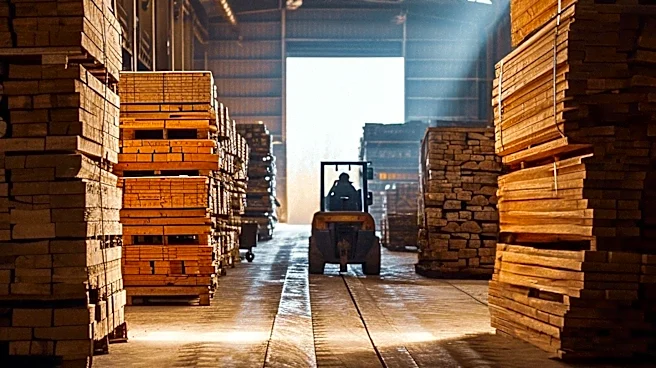
Roseburg Forest Products, a privately held company established in 1936 and headquartered in Springfield, Oregon, is a prominent North American manufacturer of various wood products. The company specializes in engineered wood, exterior trim, plywood, lumber,
and medium-density fiberboard (MDF). With approximately 3,500 employees, Roseburg Forest Products is actively involved in the sustainable management of timberland, the manufacturing of engineered wood products, and the production of plywood, lumber, and fiberboard. The company has a history of receiving debt financing, with a notable instance in 2004, and is associated with Roseburg Resources. Its operational focus includes a strong commitment to sustainability, continuous innovation in its product lines and processes, and active support for the communities in which it operates. This strategic approach positions Roseburg Forest Products as a key player in the U.S. wood products industry, contributing significantly to the supply chain for construction and other sectors.
Why It's Important?
The operations and strategic direction of Roseburg Forest Products hold significant importance for the U.S. economy, particularly within the construction, agriculture, and manufacturing sectors. As a leading producer of essential building materials like plywood, lumber, and engineered wood, the company directly influences the availability and cost of these materials for residential and commercial construction projects across North America. Its emphasis on sustainable timberland management is crucial for the long-term health of U.S. forests and the wood products industry, promoting responsible resource utilization and mitigating environmental impacts. Furthermore, the company's commitment to innovation drives advancements in wood product technology, potentially leading to more durable, efficient, and environmentally friendly building solutions. The employment of around 3,500 individuals underscores its role as a significant job creator, contributing to local economies in Oregon and other operational areas. Stakeholders in the construction industry benefit from a reliable supply of materials, while environmental groups may view the company's sustainability efforts as a positive model for the industry. Conversely, any disruptions to its operations or changes in its production capacity could have ripple effects on material prices and construction timelines.
What's Next?
Roseburg Forest Products is expected to continue its focus on sustainable practices and product innovation, which will likely involve ongoing investments in advanced manufacturing technologies and responsible timberland management. The company's commitment to community support suggests continued engagement in local initiatives and partnerships. Given its position as a major North American producer, future developments may include expanding its product offerings to meet evolving market demands, particularly in areas requiring engineered wood solutions for resilient and energy-efficient construction. The company may also explore new markets or strengthen its presence in existing ones through strategic partnerships or acquisitions. As the construction industry continues to adapt to new building codes and environmental regulations, Roseburg Forest Products will likely play a role in developing and supplying materials that meet these standards. Monitoring its financial performance and any further debt financing activities will provide insights into its growth trajectory and investment capacity. The company's sustained emphasis on innovation could lead to the introduction of new wood-based materials with enhanced properties, influencing future construction trends.
Beyond the Headlines
Beyond its immediate economic contributions, Roseburg Forest Products' long-standing commitment to sustainability and innovation carries broader implications for the U.S. wood products industry and environmental stewardship. The company's approach to timberland management sets a precedent for responsible forestry, influencing industry standards and potentially encouraging other producers to adopt similar practices. This focus on sustainability is critical in an era of increasing environmental awareness and climate change concerns, positioning wood as a renewable and carbon-sequestering building material. Furthermore, its investment in engineered wood products reflects a shift towards more efficient use of timber resources, reducing waste and maximizing the value derived from each tree. This technological advancement can also contribute to the development of more resilient and durable structures, impacting long-term infrastructure development and housing quality. The company's role in supporting local communities extends beyond employment, fostering economic stability and social well-being in timber-dependent regions. This integrated approach, combining economic activity with environmental responsibility and social engagement, highlights the complex and multifaceted impact of major industrial players on the nation's landscape and future.