






What's Happening?
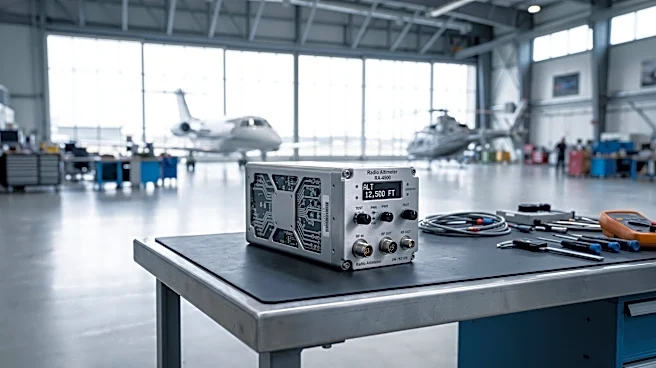
Collins Aerospace, a unit of RTX (NYSE:RTX), is planning to upgrade business aviation radio altimeters to comply with new Federal Aviation Administration (FAA) standards by 2027. These upgrades are designed to enhance the altimeters' resilience against
5G interference. The initiative aims to allow business jet operators to maintain their existing avionics architectures, thereby avoiding the need for complete system replacements. Collins Aerospace is positioning this program as a comprehensive fleetwide service solution for business jets that are subject to the evolving operational requirements set by the FAA. This move is part of a broader strategy by RTX to convert its extensive backlog of work into higher-margin hardware and recurring service revenue, supported by significant investments in manufacturing and avionics capabilities. The company anticipates that this altimeter upgrade program will contribute to its backlog and aftermarket service flow.
Why It's Important?
This upgrade program is significant for the U.S. business aviation sector as it directly addresses regulatory compliance and operational continuity. By offering 5G-resilient altimeters, Collins Aerospace helps business jet operators meet mandatory FAA standards, preventing potential grounding or operational restrictions. This approach allows operators to avoid the substantial costs and downtime associated with full avionics overhauls, preserving their current investments in aircraft systems. For RTX, this initiative strengthens its position as a key aerospace and defense supplier, securing a steady stream of aftermarket revenue and reinforcing its market share against competitors like Honeywell and Garmin. The program also highlights the ongoing impact of technological advancements, such as 5G, on aviation infrastructure and the necessity for continuous adaptation within the industry to ensure safety and efficiency.
What's Next?
The implementation of these altimeter upgrades will unfold over the coming years, leading up to the 2027 FAA deadline. Business jet operators will need to assess their fleets and schedule the necessary upgrades to ensure compliance. Collins Aerospace will likely focus on ramping up production and service capacity to meet the anticipated demand, which could involve further investments in its engineering and service centers. The success of this program will depend on the company's ability to manage potential bottlenecks and delays in the supply chain and service delivery. Analysts will be closely watching how effectively RTX converts this regulatory-driven work into sustained revenue and margin growth, particularly in its commercial aftermarket segment. The broader aviation industry will also observe how this upgrade impacts the overall safety and reliability of business jet operations in a 5G-dense environment.
Beyond the Headlines
The mandated altimeter upgrades underscore a growing trend where technological advancements in one sector, like telecommunications with 5G, necessitate significant adaptations and investments in other critical sectors, such as aviation. This situation raises questions about the coordination between different regulatory bodies and industries to mitigate potential interferences and ensure public safety. Furthermore, it highlights the economic burden placed on aircraft operators to continuously upgrade their systems to meet evolving standards, which can disproportionately affect smaller operators. The long-term implications could include a more integrated approach to technology development and regulation across sectors, fostering greater collaboration to anticipate and address future compatibility challenges. This scenario also reinforces the importance of robust aftermarket services for aerospace manufacturers, as regulatory changes often create new revenue streams for maintenance, repair, and overhaul (MRO) providers.