




What's Happening?
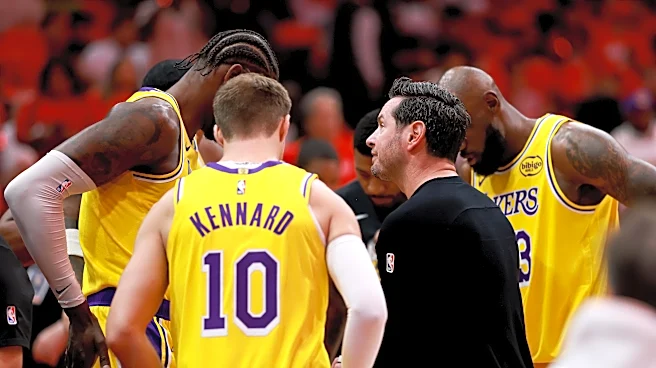
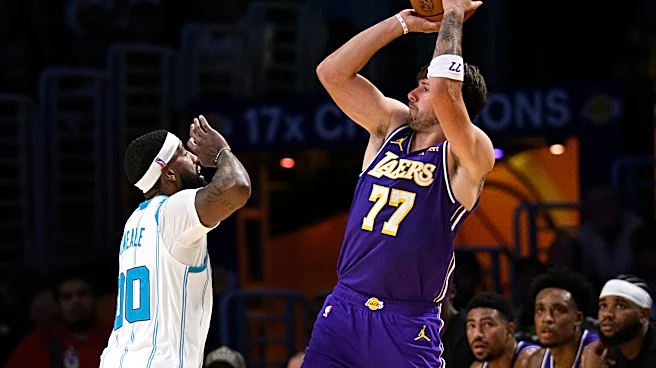
Los Angeles Lakers head coach JJ Redick encountered an unfamiliar NBA rule during his team's 118-114 overtime victory against the Charlotte Hornets. With 18 seconds remaining in overtime, play was halted due to Charlotte's Naz Reid bleeding. Under the NBA's
'blood rule,' officials removed Reid from the game and reset the Hornets' shot clock from 3.8 seconds to 14 seconds. Redick, despite his 15 years of experience in the NBA as a player, admitted in his postgame press conference that he had never heard of this specific rule application. He expressed his intent to challenge the logic behind the rule with the competition committee, questioning why the offensive team would receive additional time in such a scenario. The rule, as per NBA Rule 7 (Shot Clock) and Infection Control guidelines, dictates that if play stops due to a player bleeding, the shot clock either remains as is or resets to 14 seconds, whichever is greater. Additionally, if the offensive team is in the backcourt, they are granted a full eight seconds to advance the ball.
Why It's Important?
This incident highlights a lesser-known aspect of NBA regulations that can significantly impact game outcomes, particularly in critical late-game situations. For coaches and players, a thorough understanding of every rule is crucial for strategic decision-making. Redick's public questioning of the rule's logic could prompt a review by the NBA's competition committee, potentially leading to clarifications or adjustments. Such discussions are vital for maintaining fairness and transparency in professional sports. The 'blood rule' as applied in this instance directly benefited the Hornets by granting them more time on a crucial possession, which could have altered the game's result. This event underscores the importance of continuous education on the intricacies of the rulebook for all involved in the league, from coaching staff to officials.
What's Next?
JJ Redick has stated his intention to discuss the 'blood rule' with the NBA's competition committee. This suggests that the rule's application and underlying logic may be reviewed at an upcoming committee meeting. Such a review could lead to a formal clarification of the rule's intent, or potentially a proposal for modification if the committee finds Redick's concerns to be valid. Other coaches and league personnel might also weigh in on the rule, contributing to a broader discussion about its fairness and impact on game flow. For the Lakers, Redick's team will continue their season, aiming to maintain their strong start. The incident serves as a learning experience for the coaching staff and players regarding the nuances of NBA regulations, which could influence their preparation for future games.
Beyond the Headlines
The 'blood rule' incident, while seemingly minor, touches upon broader themes of rule interpretation and the continuous evolution of sports regulations. It raises questions about the balance between player safety (addressing bleeding) and competitive fairness (shot clock reset). The fact that a veteran like Redick was unaware of this specific application suggests that some rules, though official, may not be widely understood or consistently encountered. This could point to a need for better communication or more frequent training on obscure rules within the league. Furthermore, Redick's willingness to publicly question the rule's logic reflects a coach's responsibility to advocate for his team and the integrity of the game, potentially sparking a dialogue that could lead to more equitable rule applications in the future.