







What's Happening?
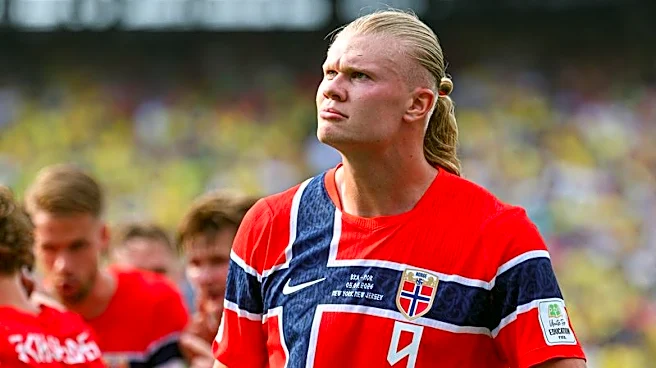
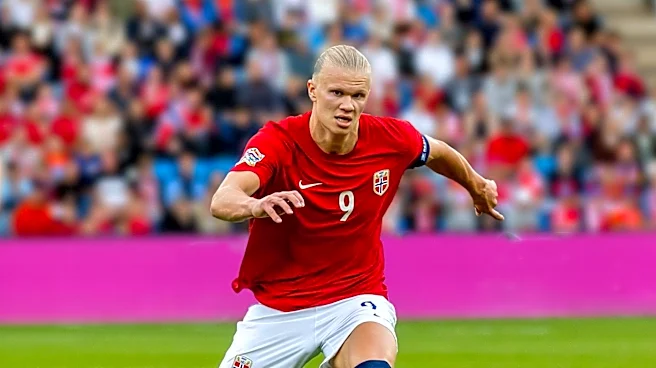
Erling Haaland, the Norwegian soccer star, is set to face England in a World Cup quarterfinal match in Miami. Haaland, who was born in Leeds, England, has been a standout performer in the tournament, scoring seven goals in four games, helping Norway reach
the quarterfinals for the first time. Despite his English birthplace, Haaland chose to represent Norway, citing his Norwegian heritage and upbringing. His father, Alf-Inge Haaland, was playing for Leeds United when Erling was born, and the family moved back to Norway when he was three. Haaland's soccer career began at Bryne FK, followed by stints at Molde FK, Red Bull Salzburg, Borussia Dortmund, and currently Manchester City.
Why It's Important?
Haaland's decision to play for Norway instead of England underscores the complex nature of national identity in sports. His performance in the World Cup has not only elevated Norway's status in international soccer but also highlighted the potential impact of dual-national players on the global stage. For Norway, Haaland's contributions have been invaluable, as he has become the country's all-time top scorer with 62 goals in 54 appearances. His success could inspire other players with dual nationalities to consider representing smaller nations, potentially altering the competitive landscape of international soccer.
What's Next?
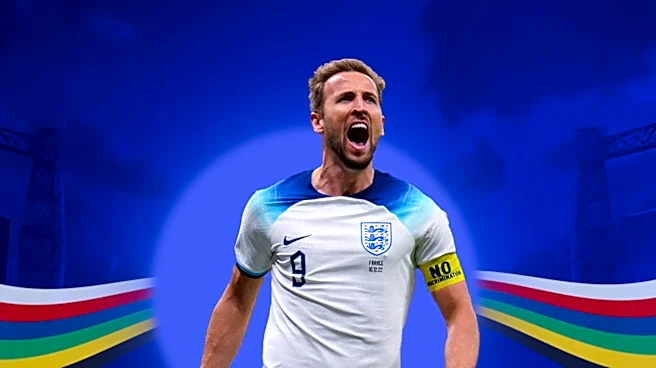
As Norway prepares to face England, the match will be a significant test for Haaland and his team. A victory could further boost Norway's profile in international soccer and solidify Haaland's status as one of the sport's top talents. The outcome of the match could also influence future decisions by players with dual nationalities, as they weigh the benefits of representing different countries. Additionally, Haaland's performance may attract more attention from clubs and sponsors, potentially impacting his career trajectory.