






What's Happening?
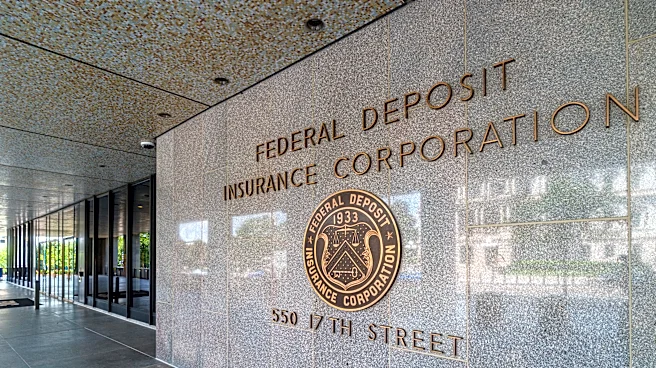
The Federal Deposit Insurance Corporation (FDIC) has proposed changes to allow qualifying community banks to exclude certain custodial deposits from brokered-deposit treatment. This proposal, approved on November 17, aims to give smaller banks, specifically
those with less than $10 billion in assets, greater flexibility to compete for funding. Under the proposed rule, eligible banks could exclude qualifying custodial deposits totaling up to 20% of their total liabilities from being classified as brokered deposits. Eligibility for this exception depends on the bank's financial condition, the structure of the deposit arrangement, and adherence to statutory requirements for custodial relationships and fees. The measure is not a blanket exemption, and public comments on the proposal are due by January 19, 2027.
Why It's Important?
This FDIC proposal is significant for the U.S. banking landscape, particularly for community banks and their competition with credit unions and other financial institutions. By reclassifying certain custodial deposits, the FDIC aims to alleviate restrictions on less-than-well-capitalized institutions that are typically limited in accepting brokered deposits. This could enable eligible community banks to attract more funding, potentially intensifying competition for deposits. While the proposal does not directly alter credit union regulations, it creates a potential competitive opening for community banks to become more aggressive in pursuing funds. The 20% ceiling on excluded deposits, measured against a bank’s total liabilities, ensures a targeted approach, preventing a general loosening of deposit restrictions and maintaining regulatory safeguards.
What's Next?
The public comment period for the FDIC's proposal extends until January 19, 2027, allowing banks, credit unions, and other stakeholders to provide feedback on how the exception should operate and whether the proposed definitions and safeguards are appropriate. Following this period, the FDIC will consider the comments before finalizing the rule. Separately, the FDIC plans to collaborate with the Federal Financial Institutions Examination Council to revise Call Report instructions to reflect the statutory changes and any final custodial-deposit rule. The ultimate impact on lending and borrowing costs will depend on how banks utilize this new flexibility and how they choose to deploy any additional qualifying deposits they attract. The proposal's central effect is to implement a targeted funding exception while retaining eligibility requirements, a volume cap, and applicable rate restrictions.