
What's Happening?
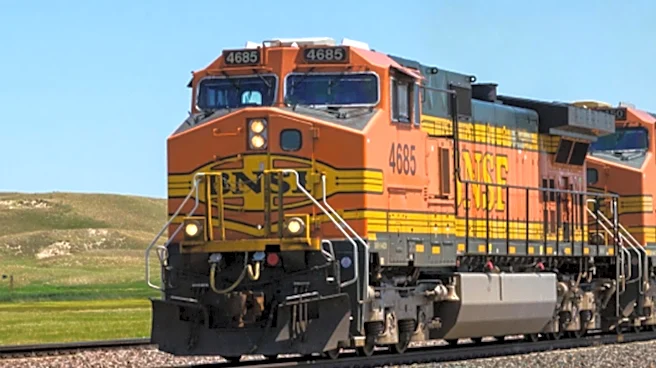
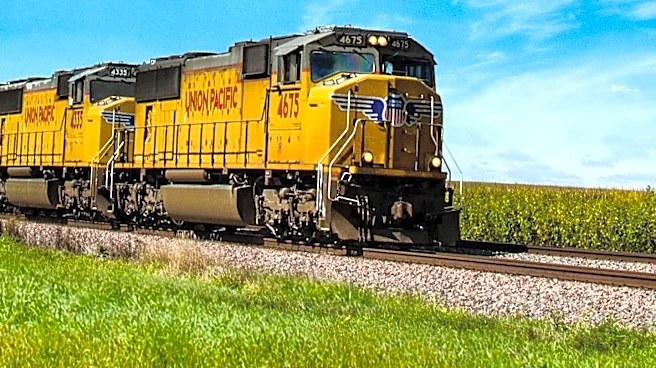
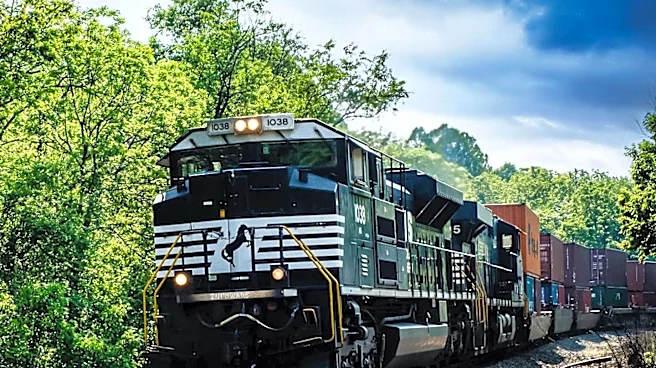
Union Pacific and Norfolk Southern have submitted a merger proposal to federal regulators, which, if approved by the Surface Transportation Board, would establish Union Pacific as the first railroad serving both the West and East coasts. This merger would make
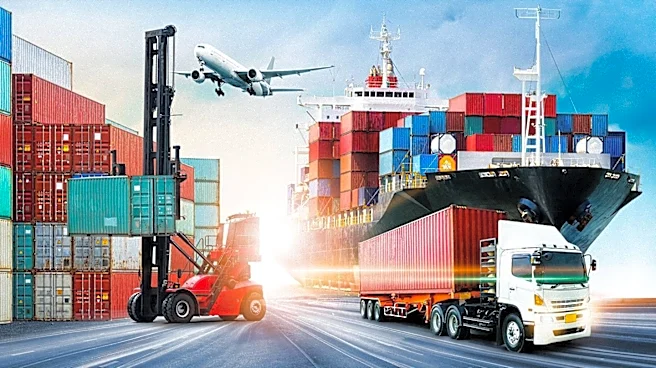
Union Pacific the largest railroad in the U.S., controlling nearly 40% of the nation's railroad tracks. Union Pacific asserts that a seamless transcontinental railroad would eliminate time-consuming rail interchanges, reduce transit times for shippers, lower costs for consumers, and strengthen national supply chains. However, the Brotherhood of Maintenance Way Employees has voiced strong opposition, arguing that the merger is not in the public interest. They contend that it could lead to higher rates and potential abandonment for numerous industries, particularly small to mid-sized businesses, by creating 'captive shippers' with limited freight shipping options.
Why It's Important?
The proposed merger carries significant implications for the U.S. economy and workforce. If Union Pacific gains control over 40% of U.S. rail track, it could lead to a functional monopoly in certain regions, potentially allowing the company to dictate higher rates and offer less responsive customer service to businesses that rely on rail transport. This could, in turn, increase the cost of everyday goods for consumers. From a labor perspective, while Union Pacific has pledged to add 1,200 new union jobs and guarantee employment for existing union workers, the Brotherhood of Maintenance Way Employees fears significant layoffs and forced relocations for their members. They argue that the job protections offered are vague and do not address their concerns about job security and geographic stability, potentially impacting the livelihoods of thousands of railroad employees.
What's Next?
The Surface Transportation Board is currently reviewing the merger proposal. Their decision will determine the future landscape of U.S. rail transportation. If approved, Union Pacific would proceed with integrating the operations of both railroads, potentially leading to the creation of a unified transcontinental rail system. However, if the merger is rejected, Union Pacific and Norfolk Southern would continue to operate independently. The Brotherhood of Maintenance Way Employees and other concerned parties are expected to continue advocating against the merger, emphasizing its potential negative impacts on competition, consumer prices, and worker welfare. The outcome of this regulatory review will set a precedent for future large-scale mergers within the U.S. transportation sector.
Beyond the Headlines
Beyond the immediate economic and labor concerns, this proposed merger highlights broader questions about market concentration and regulatory oversight in critical infrastructure sectors. The concept of 'captive shippers' underscores the vulnerability of businesses when faced with limited competitive options, raising ethical considerations about fair market practices and consumer protection. The debate also touches upon the balance between fostering efficiency through consolidation and preventing anti-competitive behavior. The long-term implications could include a re-evaluation of antitrust regulations within the rail industry and potentially influence policy decisions regarding infrastructure development and regional economic dependencies. The merger's outcome could reshape the competitive dynamics of freight transportation across the United States for decades.