








What's Happening?
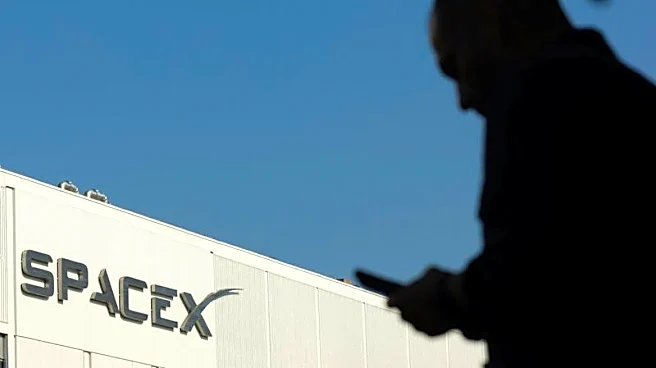
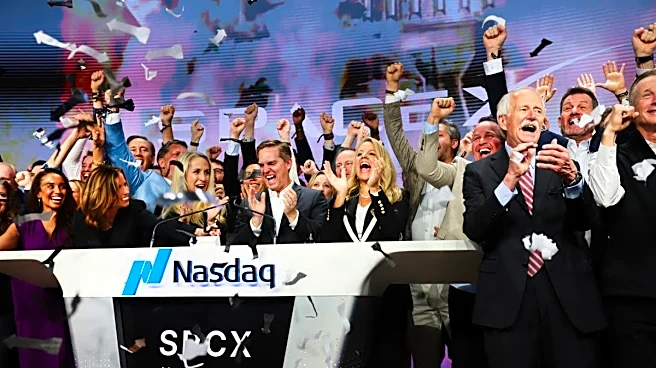
SpaceX, led by Elon Musk, has achieved a market valuation of nearly $2.8 trillion just three days after its initial public offering (IPO), surpassing Amazon and becoming the fifth-most valuable company globally. The company's shares have seen significant
gains, with a price increase of 11% on the third day of trading. SpaceX's IPO, the largest in history, initially raised $75 billion at a valuation of $1.8 trillion. The rapid increase in valuation has sparked debate among analysts, with some attributing it to Musk's leadership and SpaceX's technological edge, while others view it as a speculative bubble.
Why It's Important?
SpaceX's rapid valuation increase highlights the potential for significant shifts in the global corporate landscape, with implications for investors and competitors. The company's success underscores the growing importance of the space industry and technological innovation in driving economic growth. However, the debate over whether SpaceX's valuation is justified or a speculative bubble raises concerns about market stability and the potential for volatility. The situation reflects broader trends in the stock market, where companies with strong technological capabilities and visionary leadership can achieve unprecedented valuations.
What's Next?
As SpaceX continues to trade, market observers will be watching for signs of stability or volatility in its stock price. The company's future performance will likely influence investor sentiment and market dynamics, particularly in the technology and aerospace sectors. Additionally, SpaceX's recent acquisition of AI coding startup Cursor for $60 billion suggests a strategic focus on expanding its technological capabilities, which could further impact its valuation and market position. The ongoing debate about the sustainability of SpaceX's valuation may also prompt discussions about regulatory oversight and market practices.