







What's Happening?
Steve Cohen's family investment firm, Cohen Private Ventures, is spearheading an $80 million capital injection into Oro Mobility Holdings, a subsidiary of Hertz. Oro Mobility focuses on developing technology for shared transportation systems and autonomous
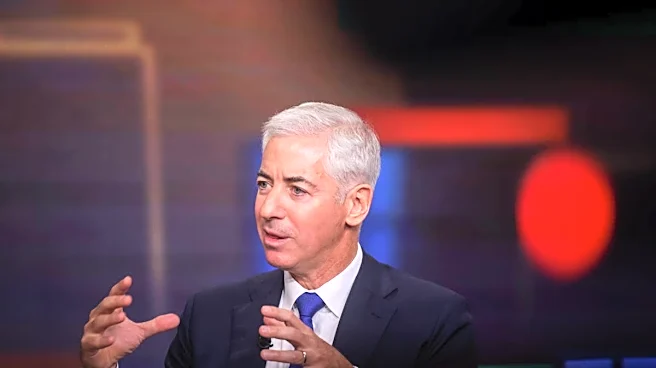
vehicles. This strategic investment, which values the unit at approximately $500 million, is seen as a measure to prevent Hertz from entering another Chapter 11 bankruptcy process. Previous investors, such as Bill Ackman's Pershing Square, have faced significant losses with Hertz. The capital provided by Cohen's firm will also be used to amortize some of Hertz's existing debt at a discount. Hertz continues to grapple with substantial leverage, with $6 billion in debt overshadowing its projected EBITDA of $220 million for the current year, according to LSEG data. Even if Hertz meets its own forecast of $1 billion in annual EBITDA, the current debt level appears unsustainable.
Why It's Important?
This investment is crucial for Hertz as it attempts to navigate its significant debt burden and avoid a potential second bankruptcy filing. A Chapter 11 bankruptcy would likely render the stakes of current private equity owners and other shareholders worthless. Cohen's approach, focusing on a promising subsidiary rather than the entire heavily indebted company, represents a defensive strategy in a challenging market. The move could set a precedent for how heavily leveraged companies with valuable, yet distinct, assets might secure funding and restructure their finances. However, this tactic, which involves separating a valuable asset from the reach of current creditors, could lead to legal challenges from those creditors. The outcome of this maneuver could influence future investment strategies in distressed companies, particularly those with innovative technology divisions.
What's Next?
The immediate future for Hertz will likely involve monitoring the reactions of its existing creditors to Cohen's investment in Oro Mobility. The strategy, inspired by a similar move by Xerox, could trigger lawsuits from creditors who feel disadvantaged by the separation of a promising asset. Hertz may be compelled to reach an agreement that defers maturities and imposes write-downs on creditors in exchange for greater equity participation. The company's stock market capitalization has already fallen significantly, reflecting market anticipation of such an outcome. Cohen's firm will likely focus on developing Oro Mobility's technology, aiming to capitalize on the speculative but potentially large market for shared transportation and autonomous vehicles. The success of this investment will depend on both the legal outcomes and the performance of Oro Mobility.
Beyond the Headlines
The investment by Cohen Private Ventures into a Hertz subsidiary highlights a growing trend where investors are targeting specific, high-potential divisions within struggling larger corporations. This 'carve-out' strategy allows investors to mitigate risk by focusing on innovative segments while the parent company deals with its broader financial challenges. The ethical and legal implications of such maneuvers, particularly regarding existing creditors, are significant. The potential for lawsuits from creditors underscores the complex legal landscape surrounding corporate restructuring and the protection of creditor rights. This situation also reflects the broader economic environment where traditional business models, like car rental, are being disrupted by technological advancements in shared mobility and autonomous driving, making strategic investments in these areas increasingly attractive despite the parent company's struggles.