
What's Happening?
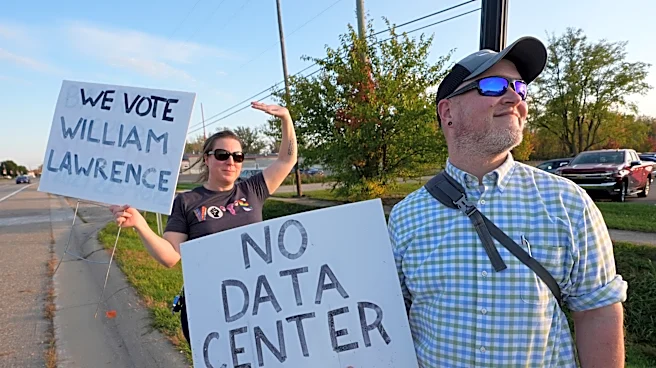
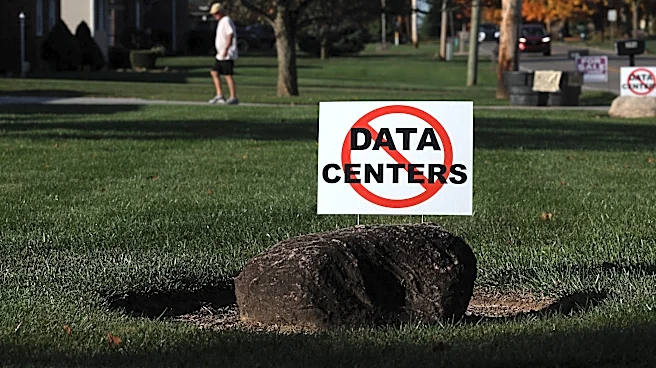
OpenAI CEO Sam Altman recently addressed employee questions regarding public opposition to AI data centers, particularly concerns about water usage. This discussion followed recent midterm elections where
candidates promising to halt data center development won in key states like Texas, Georgia, Ohio, and Michigan, which are major data center markets. Altman mused about the possibility of building data centers in desert regions to mitigate water concerns. Senior leaders at OpenAI are evaluating whether to adjust expectations for next year's computing capacity, while staff are strategizing on engaging newly elected Democrats. Tech investor Brad Gerstner estimates that up to 35% of planned U.S. data center construction for the upcoming year is at risk due to potential moratoriums, stricter environmental regulations, and extended review processes.
Why It's Important?
The growing public opposition to AI data centers, particularly concerning environmental impacts like water usage, poses a significant challenge to the U.S. technology sector's expansion. The election results in major data center markets indicate a shift in public sentiment and political will, potentially leading to increased regulatory hurdles and construction delays. This could impact the availability and cost of computing infrastructure essential for AI development and deployment, affecting companies like OpenAI, Meta Platforms, and Anthropic. The risk of moratoriums and tighter environmental rules could force tech giants to reconsider their U.S. investment strategies, potentially shifting new builds to international locations or focusing on expanding existing facilities. This situation highlights a critical intersection of technological advancement, environmental sustainability, and local community concerns, with significant implications for economic growth and job creation in affected regions.
What's Next?
Tech companies, including OpenAI, are expected to intensify their efforts in public relations and community engagement to address concerns about data centers. OpenAI President Greg Brockman has emphasized the need to better communicate the benefits of data centers to local communities. OpenAI has also pledged to stop requiring officials to sign non-disclosure agreements and to publish the energy, water, and noise impacts of its projects. Anthropic, another AI company, has flagged moratoriums as a risk in its S-1 filing and is pursuing projects in non-U.S. jurisdictions to reduce concentration risk. Companies may increasingly explore sites abroad or expand existing facilities where communities have already seen economic benefits. The coming months will likely see increased dialogue between tech companies, local governments, and communities to find mutually beneficial solutions, potentially leading to new environmental standards and community benefit agreements for data center development.
Beyond the Headlines
The backlash against AI data centers underscores a broader societal tension between technological progress and environmental stewardship. As AI becomes more pervasive, its physical footprint, particularly in terms of energy and water consumption, is becoming a critical issue. This situation could catalyze innovation in sustainable data center design and operation, pushing companies to develop more energy-efficient cooling systems and explore renewable energy sources. It also highlights the need for greater transparency from tech companies regarding their environmental impact and a more proactive approach to community engagement. The outcome of these debates could set precedents for how large-scale infrastructure projects, especially those related to emerging technologies, are approved and integrated into communities, potentially influencing future policy on industrial development and environmental protection.