



What's Happening?
Germany is prepared to support Azerbaijan's green energy export projects, as stated by Gerlind Heckmann, Deputy Director General at the German Federal Ministry for Economic Affairs and Energy (BMWE). This announcement was made during the German-Azerbaijani
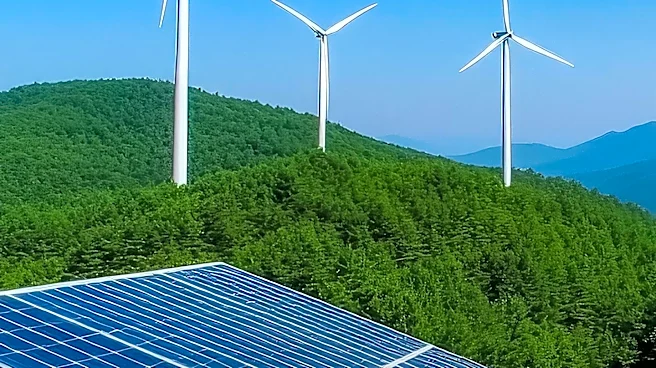
Strategic Partnership and Connectivity Conference in Baku. Germany sees significant potential for developing bilateral economic relations with Azerbaijan, particularly in the energy sector. The German government is keen to support German companies operating in or exporting to Azerbaijan, including through long-term export credits and collaborations with multilateral development banks to structure projects and financing packages. The renewable energy sector in Azerbaijan is identified as having substantial potential for exploration and implementation, and Germany is ready to assist in the realization of concrete projects in this area. A key aspect of this cooperation involves the phased establishment of a 'green corridor' for exporting green energy to Europe, a process acknowledged to require time and systematic development.
Why It's Important?
This development signifies a strategic move towards diversifying Europe's energy sources and promoting renewable energy initiatives. For the U.S., while not directly involved, it underscores the global shift towards green energy and the increasing importance of energy security through varied international partnerships. The establishment of a 'green corridor' could set a precedent for similar regional energy collaborations, potentially influencing future U.S. foreign policy and investment strategies in emerging energy markets. German support for Azerbaijan's green energy projects could also lead to increased competition in the global energy market, impacting U.S. energy companies and their international operations. Furthermore, the emphasis on long-term economic substance in bilateral relations highlights a broader trend of intertwining economic and political stability, which is relevant to U.S. diplomatic and trade interests in the region.
What's Next?
The immediate next steps involve the identification and development of concrete green energy projects in Azerbaijan. The German government will continue to support German companies and collaborate with multilateral development banks to facilitate these initiatives. The systematic examination and development of the 'Green Corridor' structure will be a continuous process, requiring patience and sustained effort. The newly established German-Azerbaijani Business Council is expected to play a crucial role in structuring the economic dialogue more systematically, focusing on economic substance. Opportunities for cooperation are extensive, spanning infrastructure, transport, energy, and agriculture. The peace process in the region is also anticipated to positively impact economic development, potentially leading to new transport links, market exploration, and long-term investment plans.
Beyond the Headlines
Beyond the immediate economic and energy implications, this initiative carries significant geopolitical weight. The focus on green energy exports from Azerbaijan to Europe could reduce Europe's reliance on traditional energy sources, thereby altering geopolitical dynamics in the broader region. For the U.S., this could mean a re-evaluation of its energy security strategies and alliances. The emphasis on peace and stability in the region as a prerequisite for economic development highlights the interconnectedness of political and economic landscapes. This approach could serve as a model for other conflict-affected regions, demonstrating how economic cooperation, particularly in sustainable sectors, can foster long-term stability. The long-term nature of the proposed gas supply agreements and green energy projects suggests a deeper commitment to sustainable development and energy transition, which aligns with global climate goals and could influence international environmental policies.