




What's Happening?
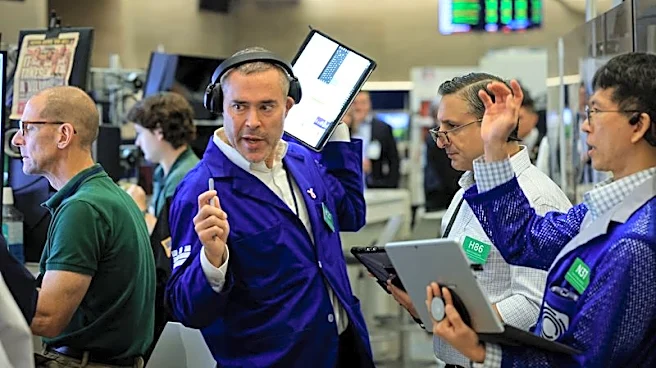
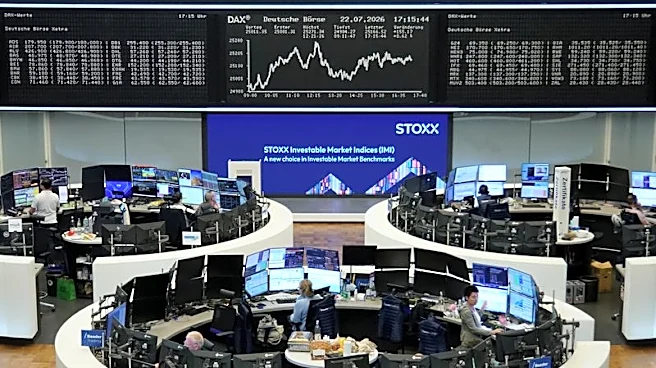
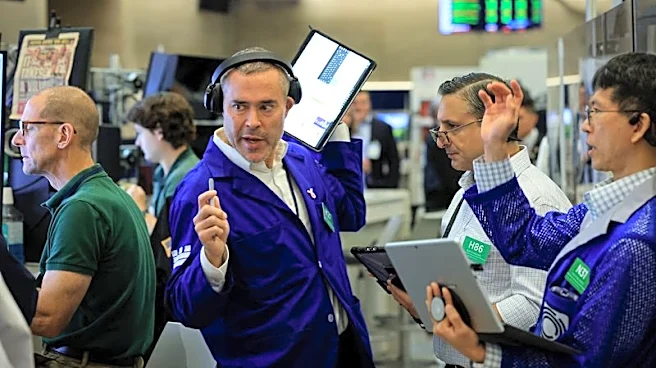
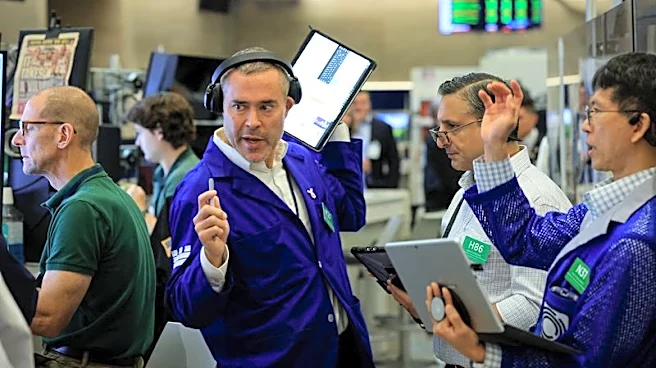
The U.S. stock market experienced gains on Friday, concluding a volatile month. The Nasdaq Composite rose by approximately 1%, while the Dow Jones Industrial Average and the S&P 500 increased by 0.5% and 0.7%, respectively. This rise comes as Big Tech
companies continue to invest heavily in artificial intelligence, with Amazon, Microsoft, Meta, and Alphabet forecasting a combined spending of $720 billion to $745 billion on capital projects in 2026. The 10-year Treasury yield also reached its highest level since January 2025, at 4.73%, as investors reacted to the Federal Reserve's decision to maintain interest rates without providing forward guidance. Amazon's stock surged by 15% following strong earnings, while Apple's stock fell by 7% due to underwhelming revenue from its Services and China sectors. Additionally, oil prices increased as tensions in the Strait of Hormuz affected traffic, with WTI crude futures trading at around $85 per barrel.
Why It's Important?
The continued investment in AI by major tech companies signals confidence in the technology's future potential, which could drive further innovation and economic growth. The rise in stock prices reflects investor optimism despite the Federal Reserve's cautious stance on interest rates. However, the increase in oil prices and Treasury yields could impact consumer spending and borrowing costs, potentially slowing economic recovery. The tech sector's performance is crucial as it significantly influences the overall market, and its growth could lead to increased job creation and technological advancements. Conversely, rising energy costs may strain consumer budgets, affecting overall economic sentiment.
What's Next?
Investors will likely continue to monitor the Federal Reserve's actions and statements for any indications of future interest rate changes. The tech sector's performance will remain a focal point, especially as companies release further details on their AI investments. Additionally, geopolitical developments in the Strait of Hormuz could influence oil prices and, consequently, consumer spending. Market participants will also watch for any shifts in consumer sentiment, as indicated by future reports from institutions like the University of Michigan.