



What's Happening?
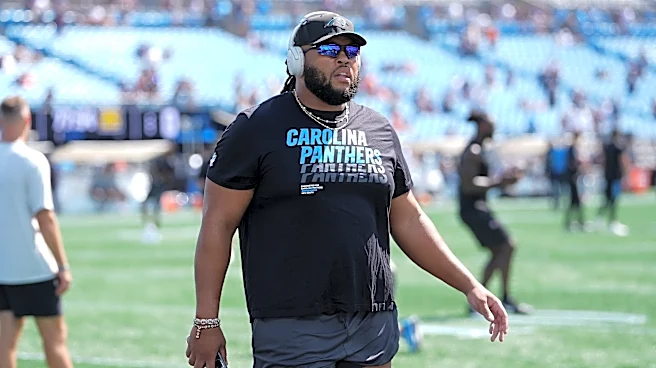
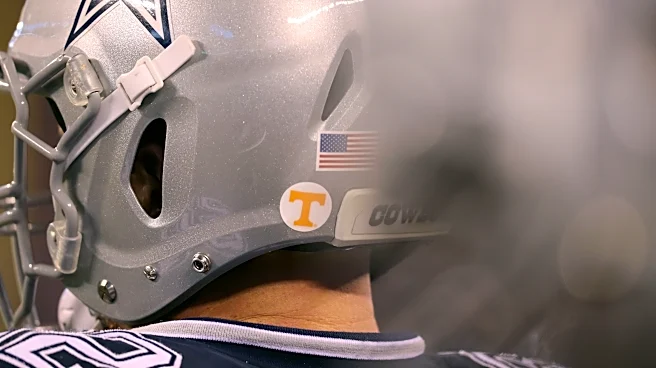
The Dallas Cowboys' 2024 trade for wide receiver Jonathan Mingo has been identified by Brent Sobleski of Bleacher Report as one of the NFL's worst deadline mistakes over the past decade. The Cowboys sent a fourth-round pick to the Carolina Panthers for Mingo and
a seventh-round pick, with owner Jerry Jones initially praising the move. However, Mingo has recorded only nine receptions for 101 yards in 22 games for the Cowboys, a significant underperformance. This lack of production, coupled with the availability of better options at the time, such as DeAndre Hopkins, has led to criticism of the trade. Despite his struggles, Mingo remains on the roster, with the team attempting to utilize him in various roles, including as a punt and kick returner.
Why It's Important?
This assessment of the Jonathan Mingo trade highlights critical issues in NFL team management, particularly regarding player evaluation and trade strategy. For the Dallas Cowboys, it represents a significant misallocation of draft capital and financial resources, impacting their roster depth and on-field performance. Such a 'bust' trade can hinder a team's ability to contend, as valuable assets are spent on players who do not deliver expected results. It also raises questions about accountability within the organization, especially given Jerry Jones's initial endorsement of the move. For other NFL teams, this serves as a cautionary tale about the risks associated with trade deadline acquisitions and the importance of thorough scouting and strategic planning.
What's Next?
The Dallas Cowboys face ongoing challenges with Jonathan Mingo's role and production. Despite his limited impact, the team continues to try and integrate him, even using him in special teams. This persistence might stem from a desire to justify the initial investment, but it could also prevent the team from exploring more effective roster alternatives. If Mingo's performance does not improve, the Cowboys will likely need to make a decision regarding his future, potentially cutting ties to free up roster space and salary cap. The trade's negative impact could also influence future trade deadline strategies for the Cowboys, making them more cautious about similar high-risk acquisitions.
Beyond the Headlines
The Jonathan Mingo trade saga extends beyond a simple football transaction, touching upon the psychological aspects of decision-making in high-stakes environments. Jerry Jones's reluctance to move on from Mingo, despite his poor performance, could be interpreted as a form of sunk cost fallacy, where past investments influence future decisions even when they are no longer rational. This situation also underscores the immense pressure on NFL general managers and owners to make impactful moves, often leading to gambles that don't pay off. The public and media scrutiny surrounding such trades can create a difficult environment for admitting mistakes, potentially prolonging suboptimal roster decisions. It highlights the complex interplay of ego, financial commitment, and strategic planning in professional sports.